From the inside, out.
Four years at Amazon Studios in two jobs: the producer and designer behind internal communications, then the creative lead for the studio’s inclusion team and its public report.
Brand · Editorial · Web · Motion · Film
Four years at Amazon Studios in two jobs: the producer and designer behind internal communications, then the creative lead for the studio’s inclusion team and its public report.
Brand · Editorial · Web · Motion · Film

Four years at Amazon Studios, in two jobs. First I built the channels that kept more than ten thousand people informed while the studio worked from home. Then I led creative for the inclusion team, and the work went public: a brand, the Policy and Playbook site, the films, and two Progress on Inclusion reports.
Both jobs came down to the same thing: getting the right page in front of the right person, and making it worth their time. The work below is in three parts, and these are the numbers behind it.
Amazon has since retired the Policy and the Playbook, so for the inclusion work this page is also where it is kept.
Inside the studio A hub, a weekly update, three broadcast series, and the identities for the events around them.
The inclusion work The ccDEIA brand, the public site, the Policy and Playbook, and the report in two editions.
On camera Interview shoots, title sequences, program films, and the stage graphics for a summit.
A studio of more than ten thousand people, all suddenly at home, needed one place to look. The work was a front door, a weekly habit, and a way to put leadership on screen every month.
The opportunity. Twenty teams each kept their own wiki page and sent their own email, mostly composed in Word and Outlook, with no way to read well on a phone and no way to know who opened them. Leadership talks happened on a video call and were gone when the call ended. Every one of those was useful. Together they were hard to follow.
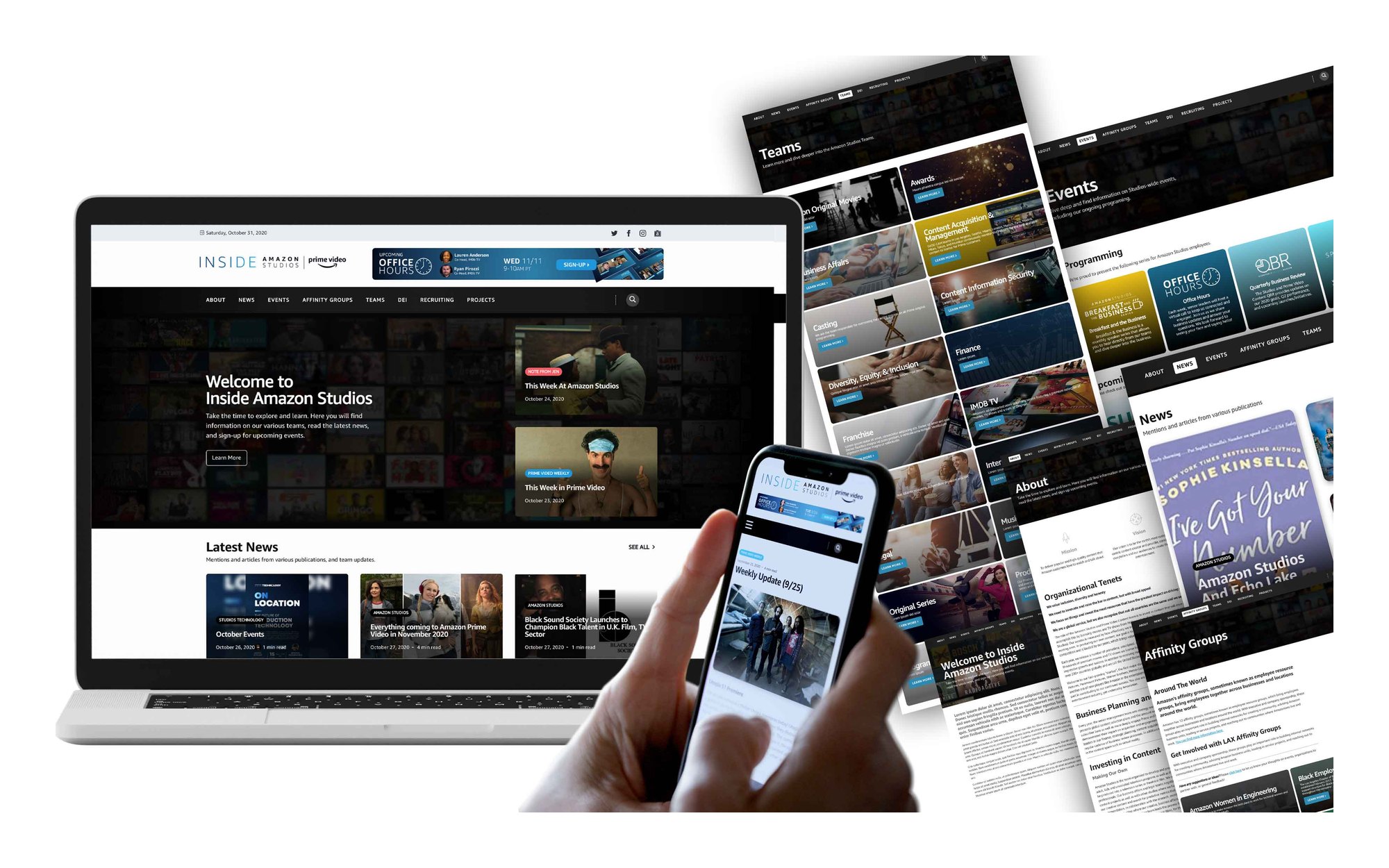
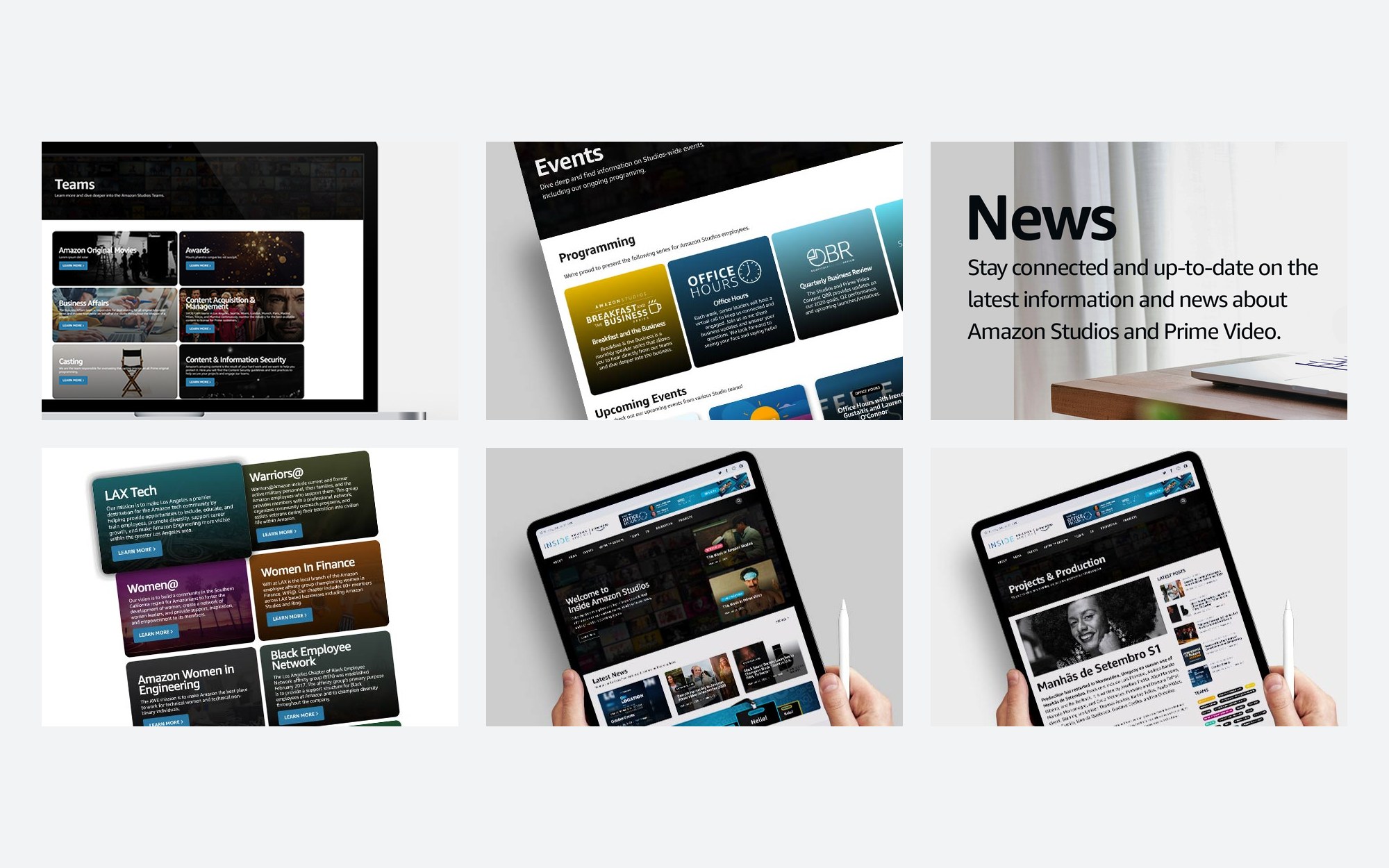
The system. One site, Inside Amazon Studios, with a section for every team. One weekly update with a fixed structure people could skim. One channel, Inside, for the recorded series. And one look across all of it, so an employee could tell at a glance that a message was official and worth opening.
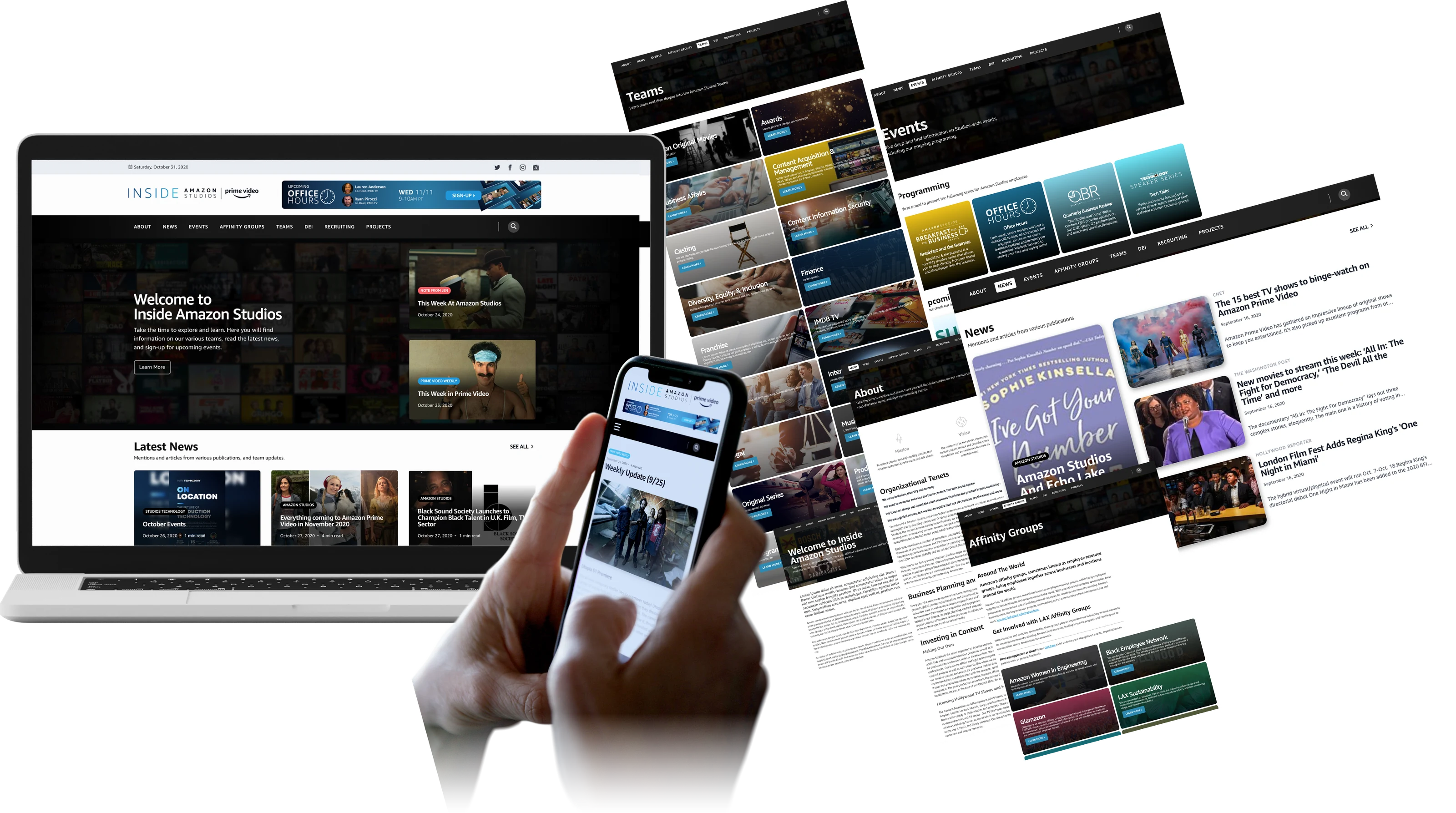
The brief was a single home for everything the studio needed to tell its own people. I researched a platform that information security would approve, got it cleared, and built the site myself. That saved about twenty thousand dollars in development, and it meant I could change the site the same day somebody asked.
The part I’m proudest of is what happened after launch. I trained fifteen editors across the teams, wrote them a quick guide, and gave each team a header and a page pattern to work inside. The site grew without me touching every page, and it stayed recognizable while it did.
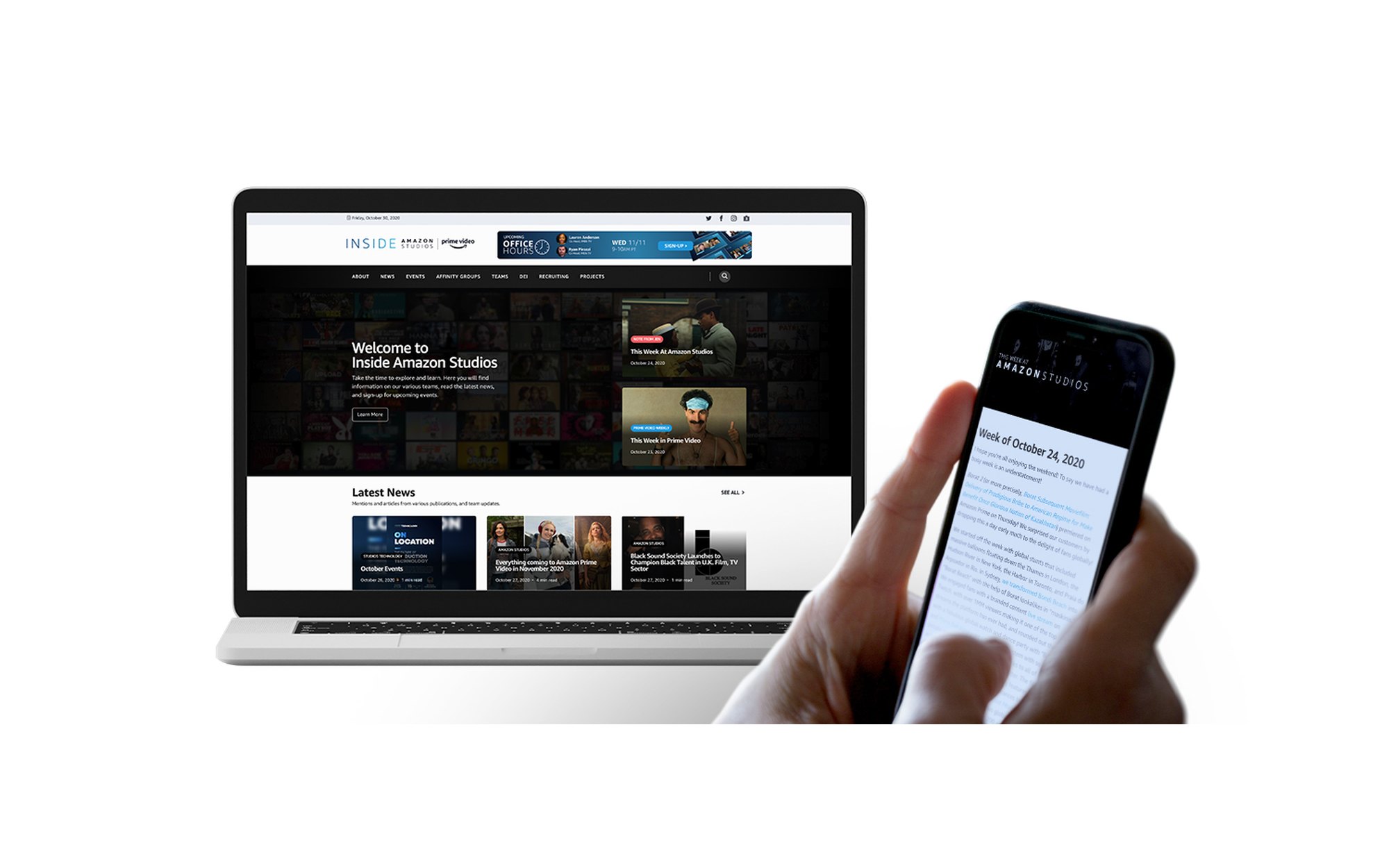
Inside Prime Video & Studios went out every week to about seven thousand Prime Video employees and thirty-nine hundred at the studio. I designed more than a hundred issues. The structure never changed: the masthead, what premiered, what was nominated, what the social team saw that week. The art changed every time, because the slate did.
Before I joined, these emails were laid out in Word. I worked with the comms leads to bring in a proper email platform, which gave us layouts that worked on a phone and, for the first time, numbers: open rates, read time, where people were reading from. The weekly update averaged a 70 percent open rate.
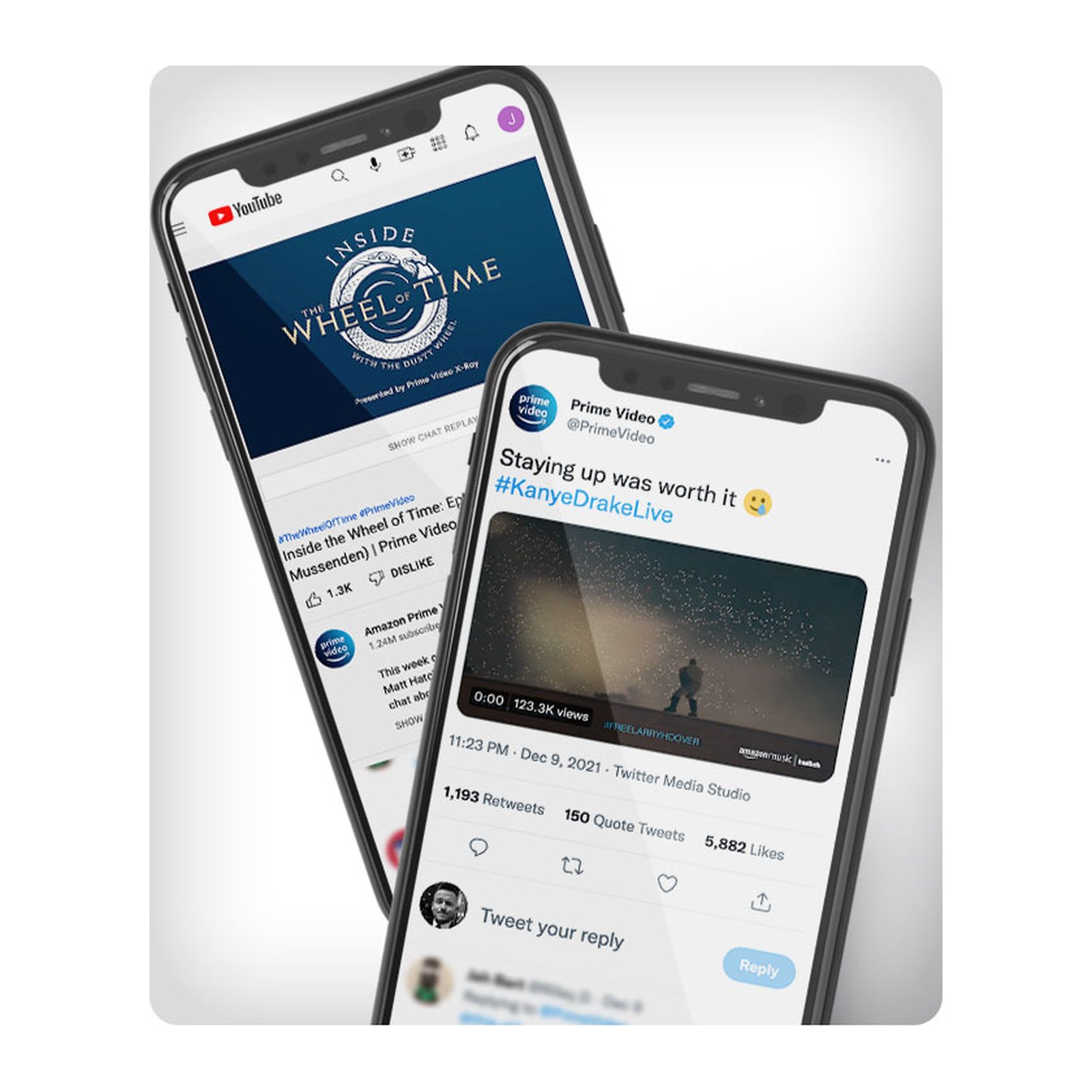
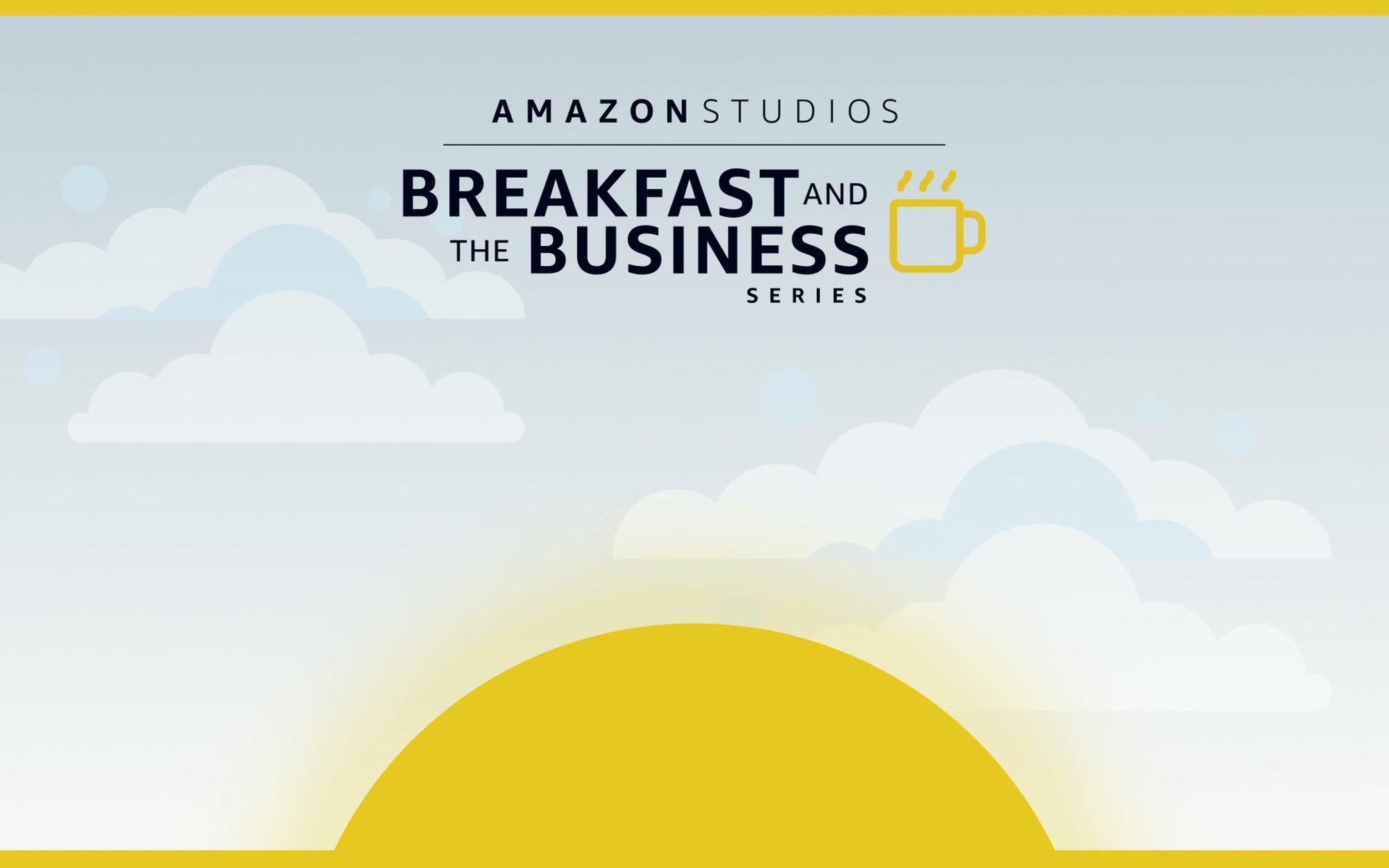
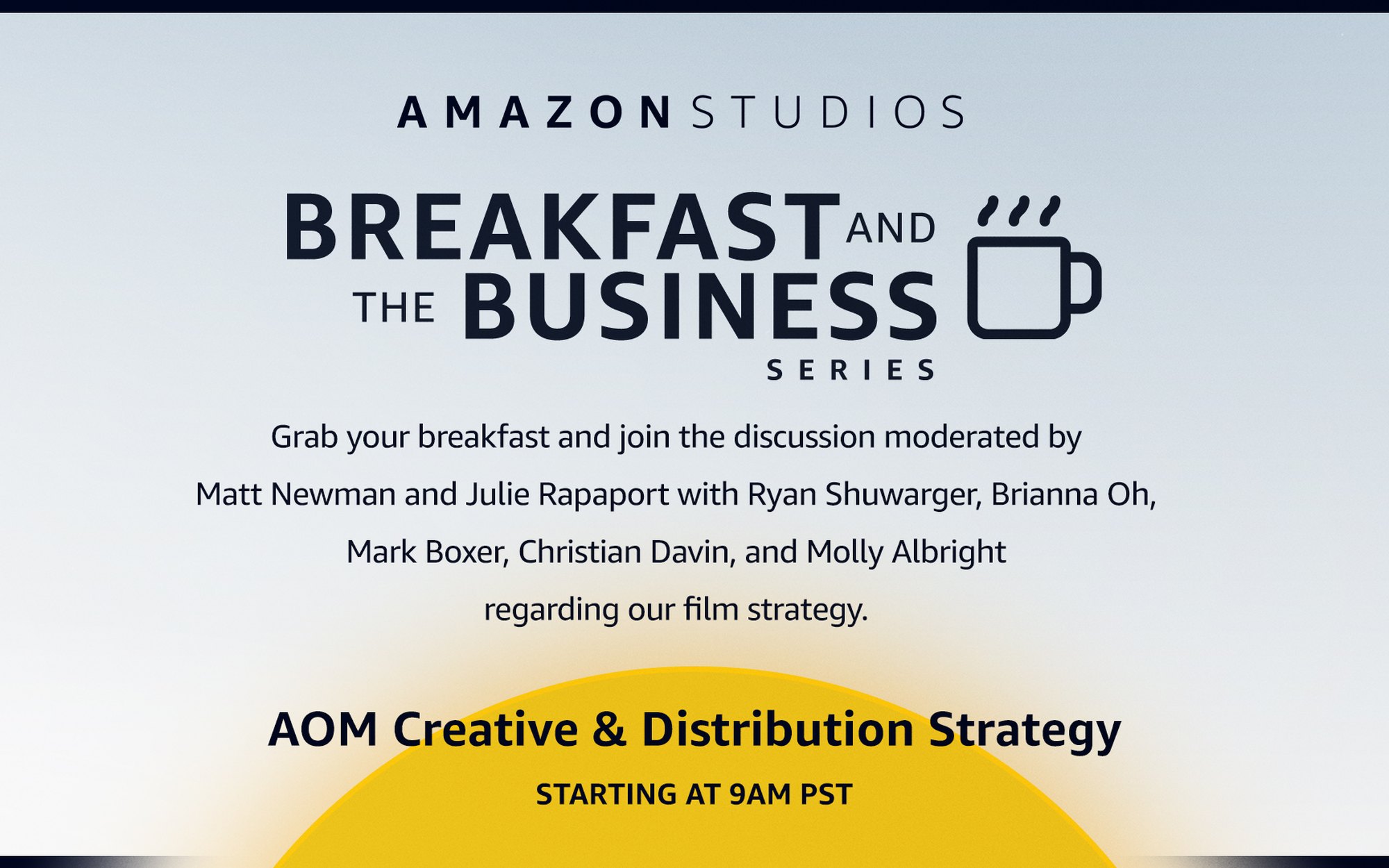
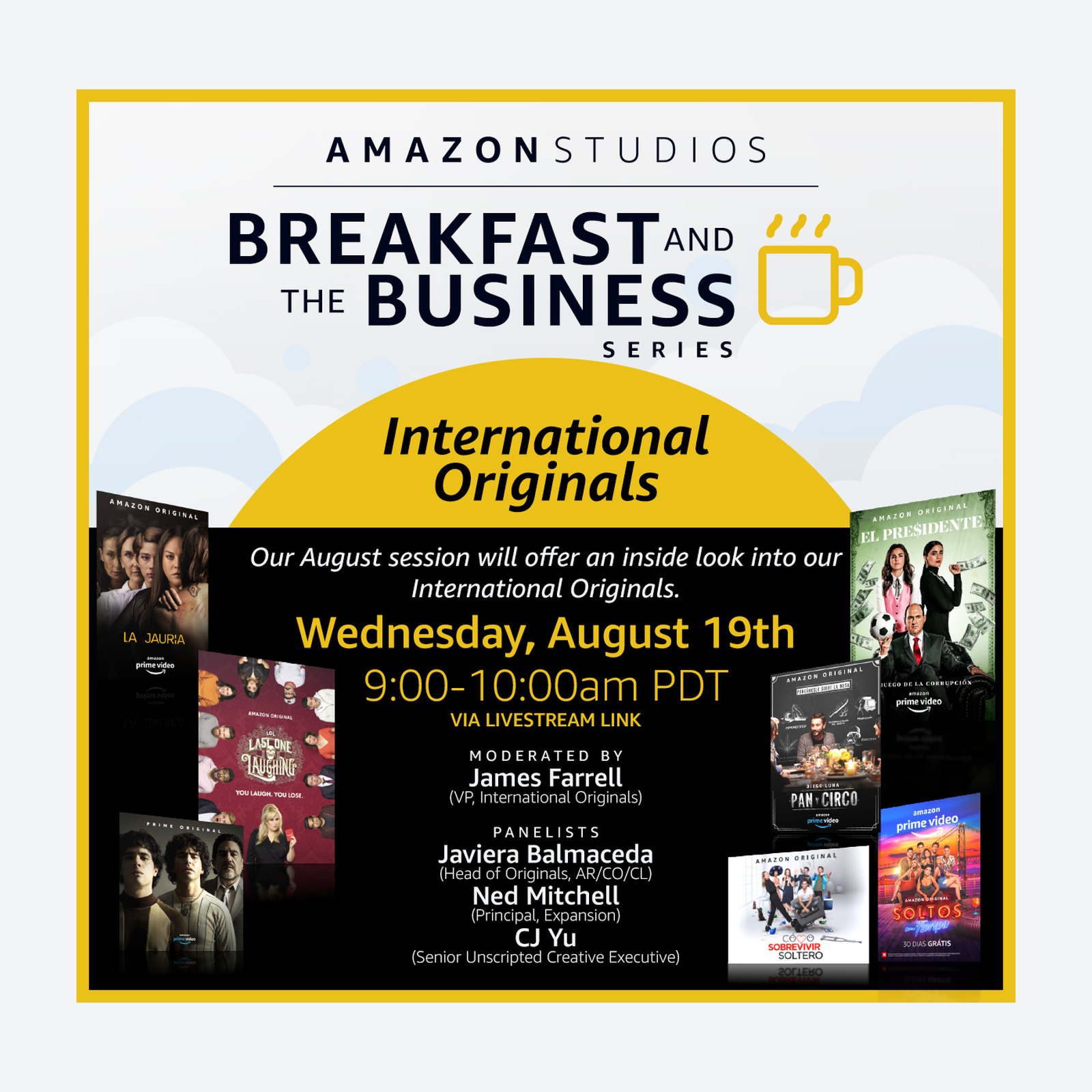
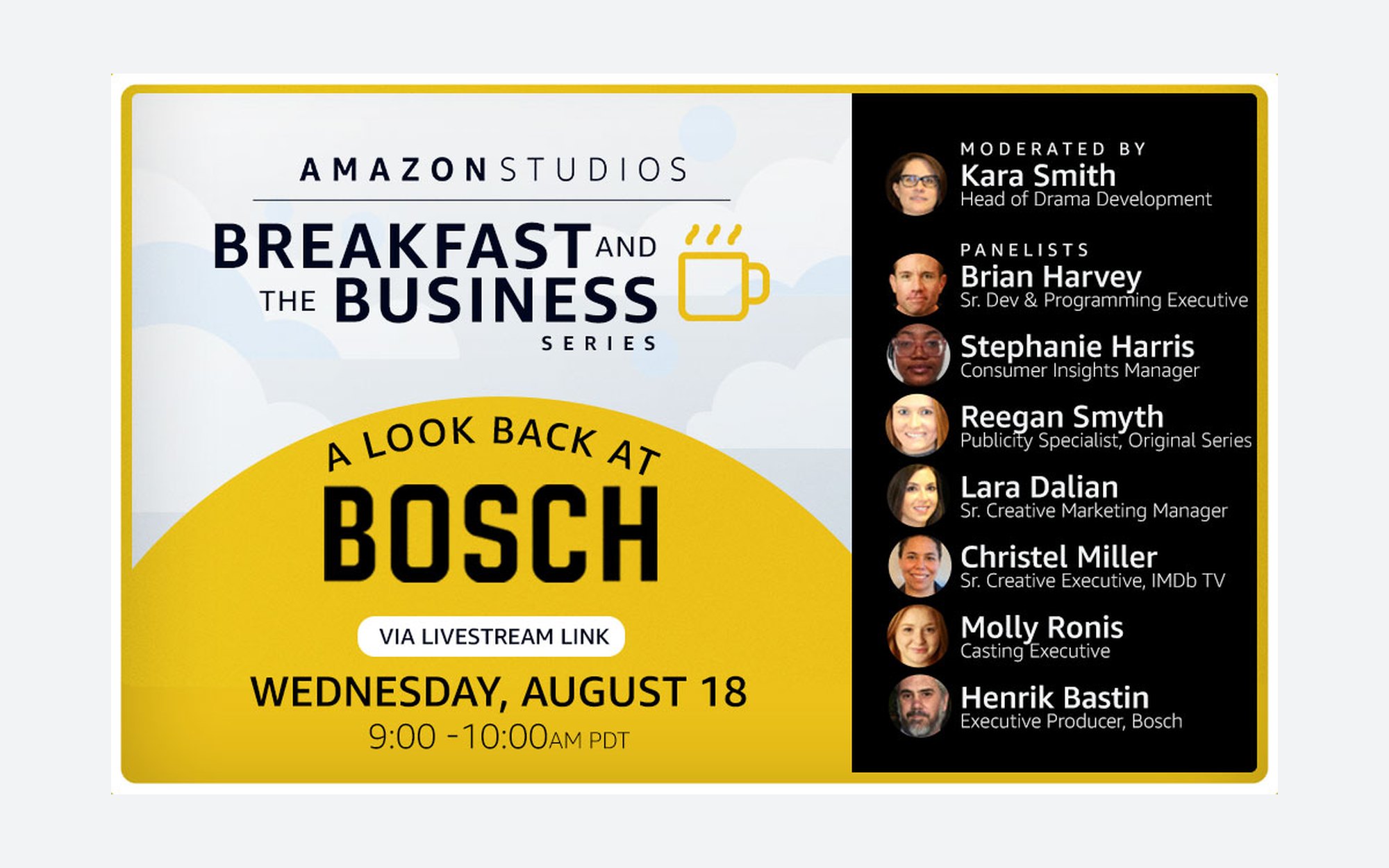
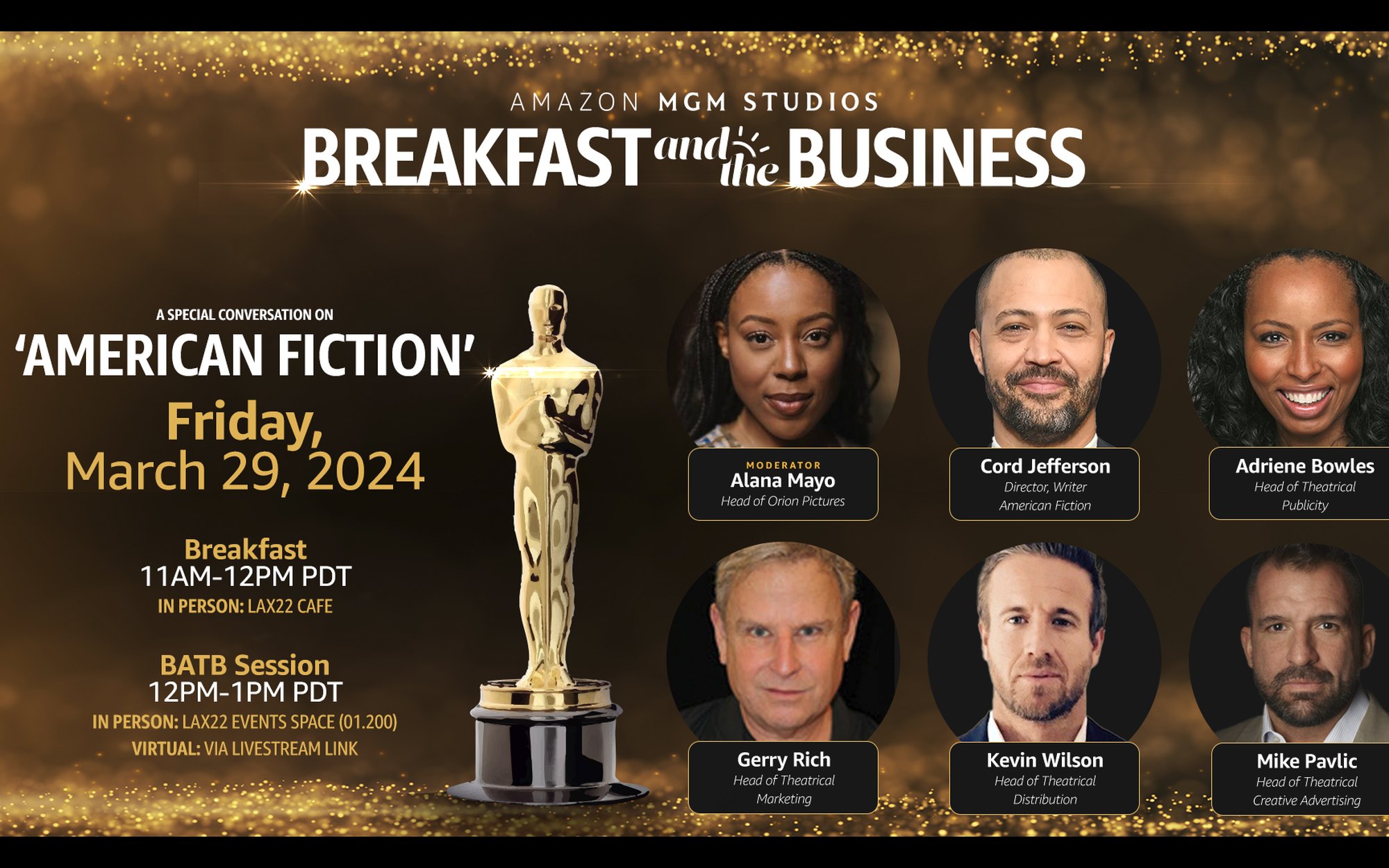
Office Hours and Breakfast and the Business were the studio’s two standing conversations: leaders and showrunners, live, once a month. I designed the identity for each, along with the Inside channel they lived on, and then did the unglamorous half. I recorded every session off a video call that was never meant for broadcast, cut it, added the open and the lower thirds, and posted it for the people who missed it. More than fifty episodes went out that way.
The format had to survive being made by one person on a deadline. So each series was a kit: an animated open, a cover, an invite in two sizes, a thank-you email. By 2024 Breakfast and the Business was an in-person event with a film’s cast and crew on stage, and the kit still held.
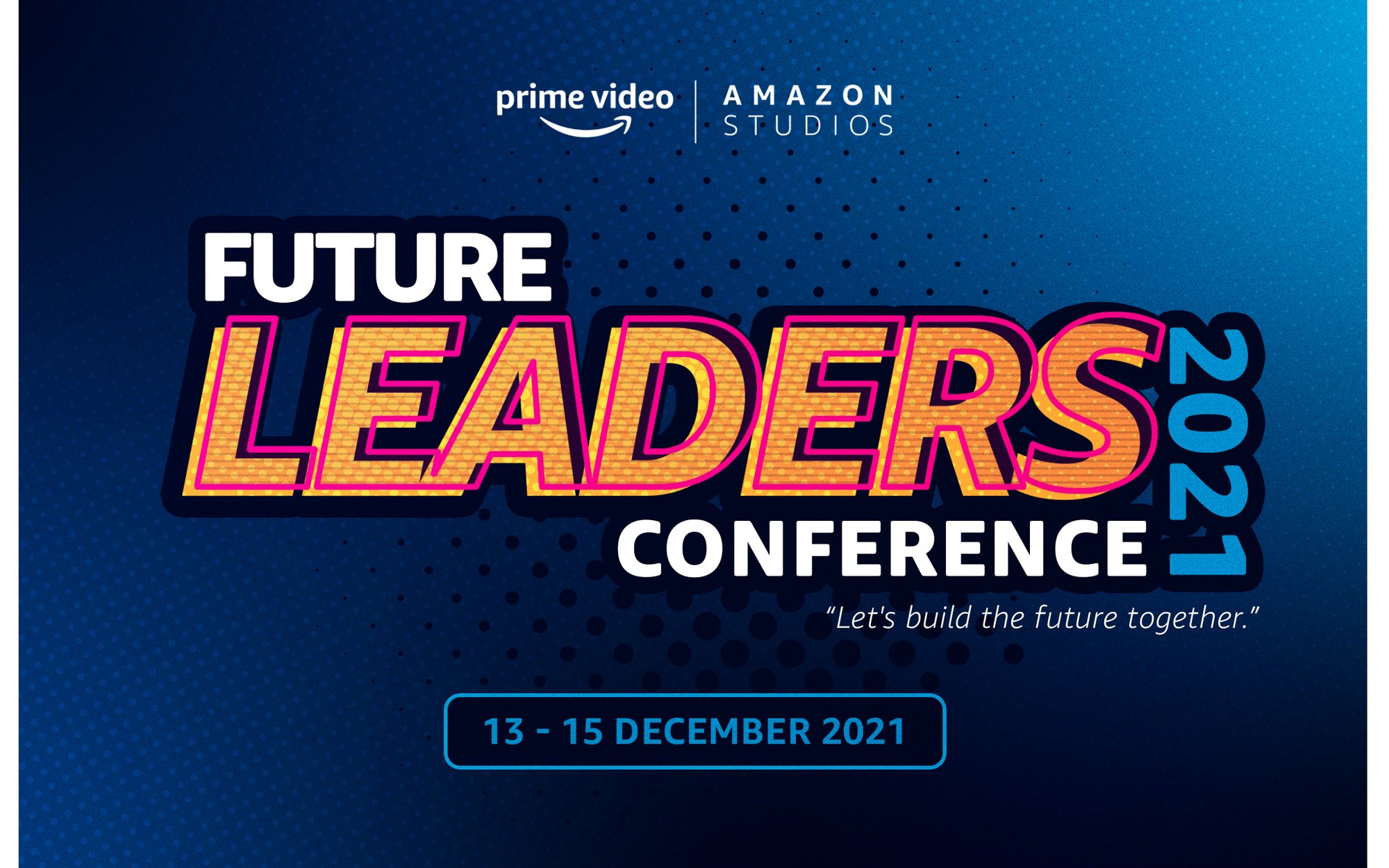
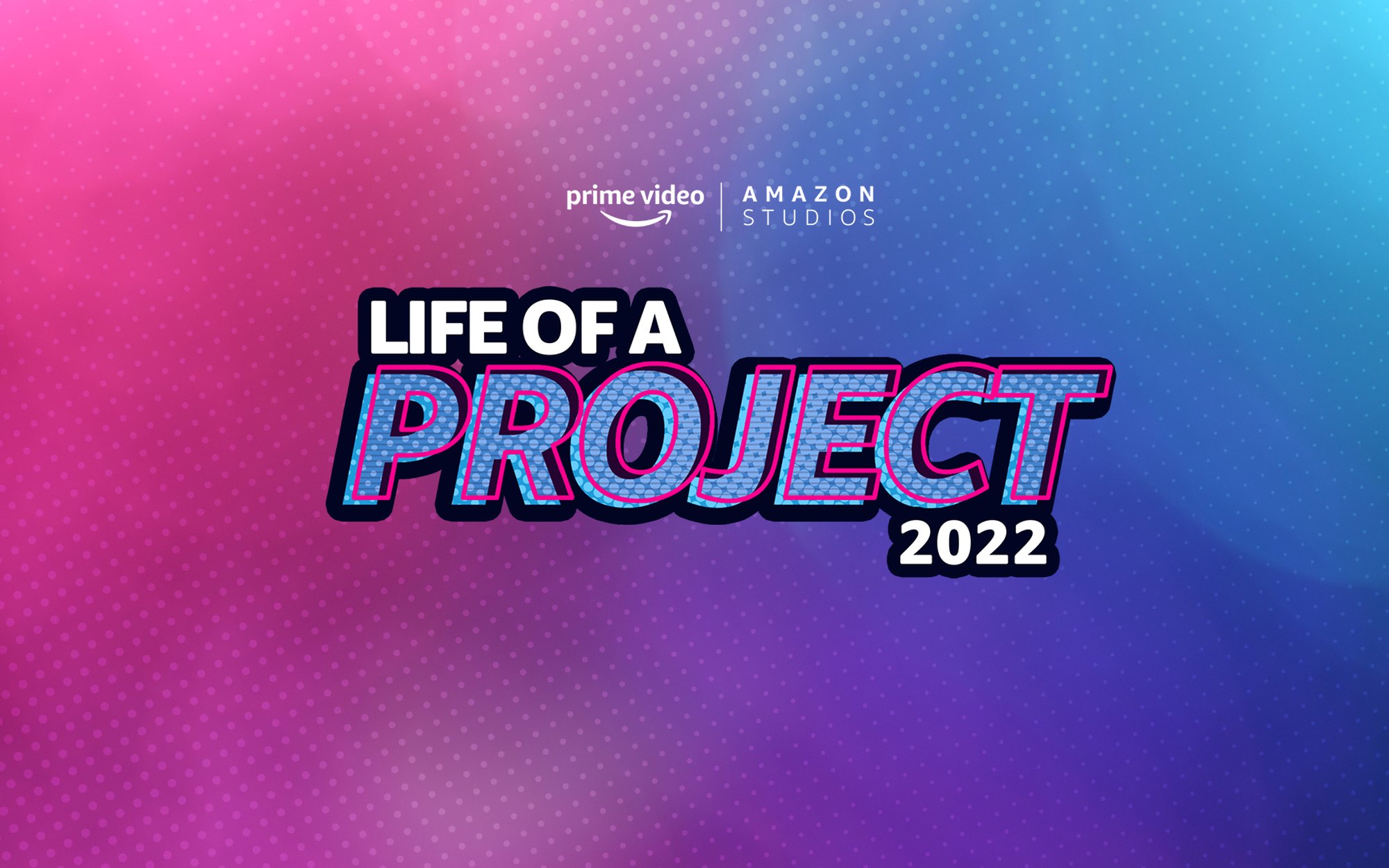
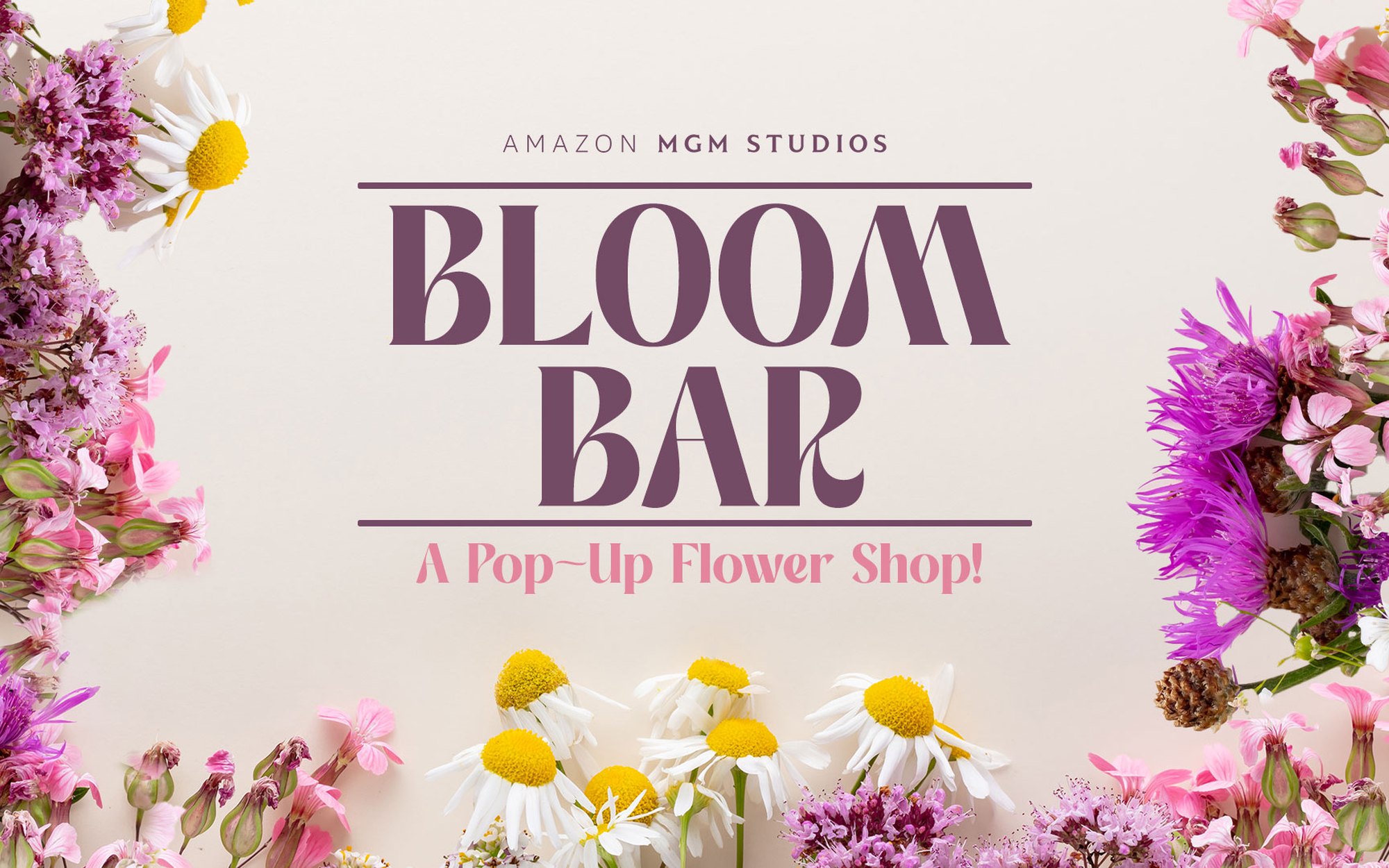
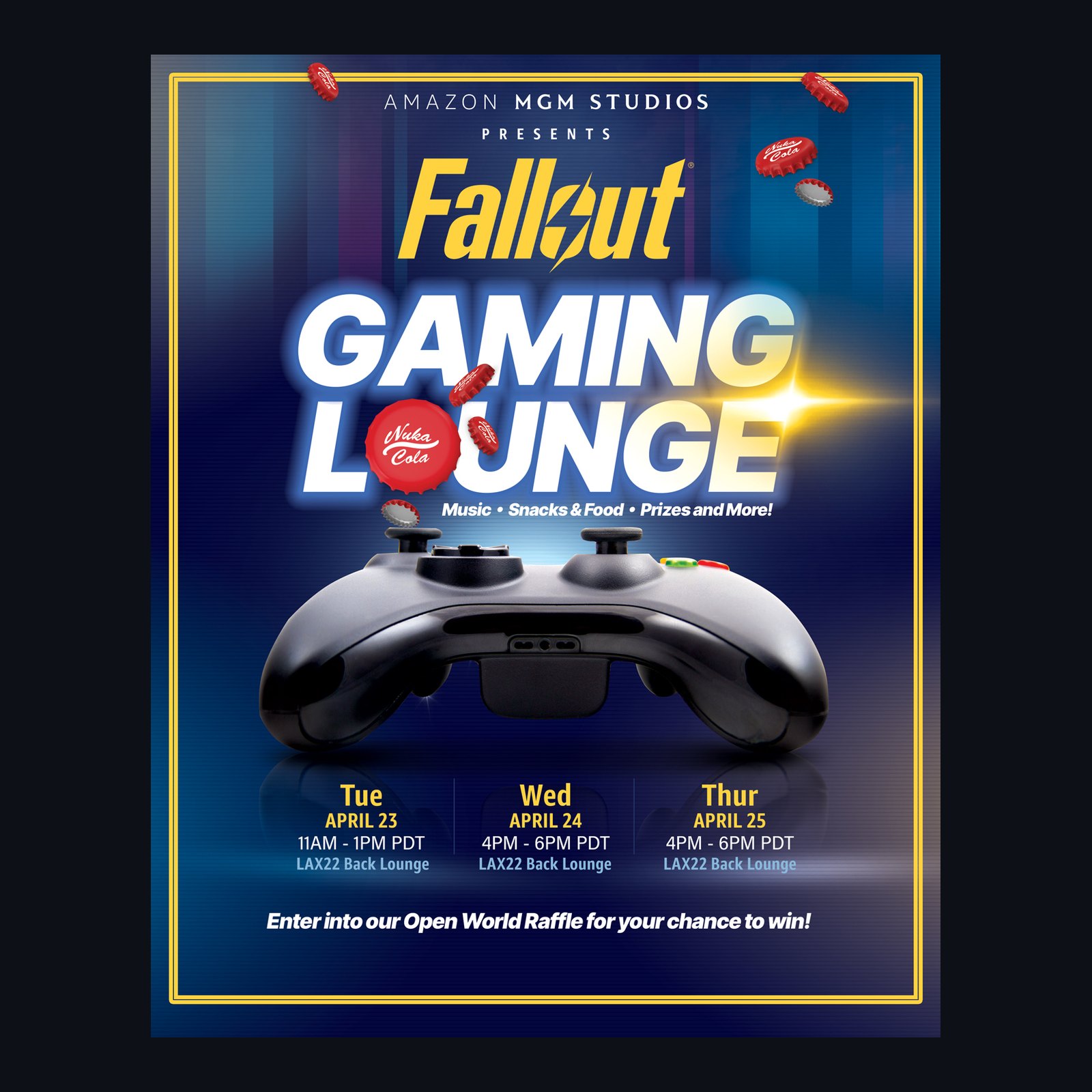
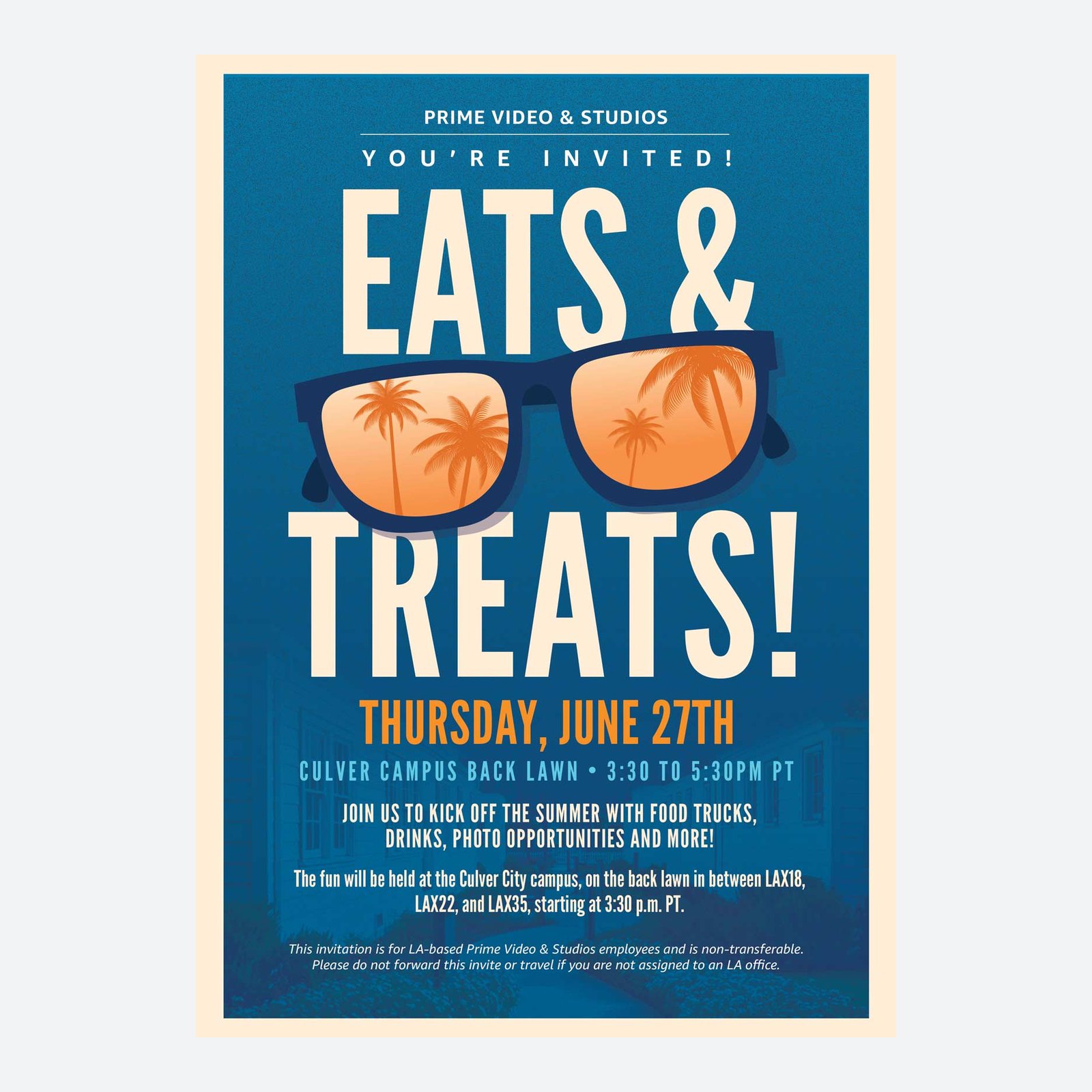
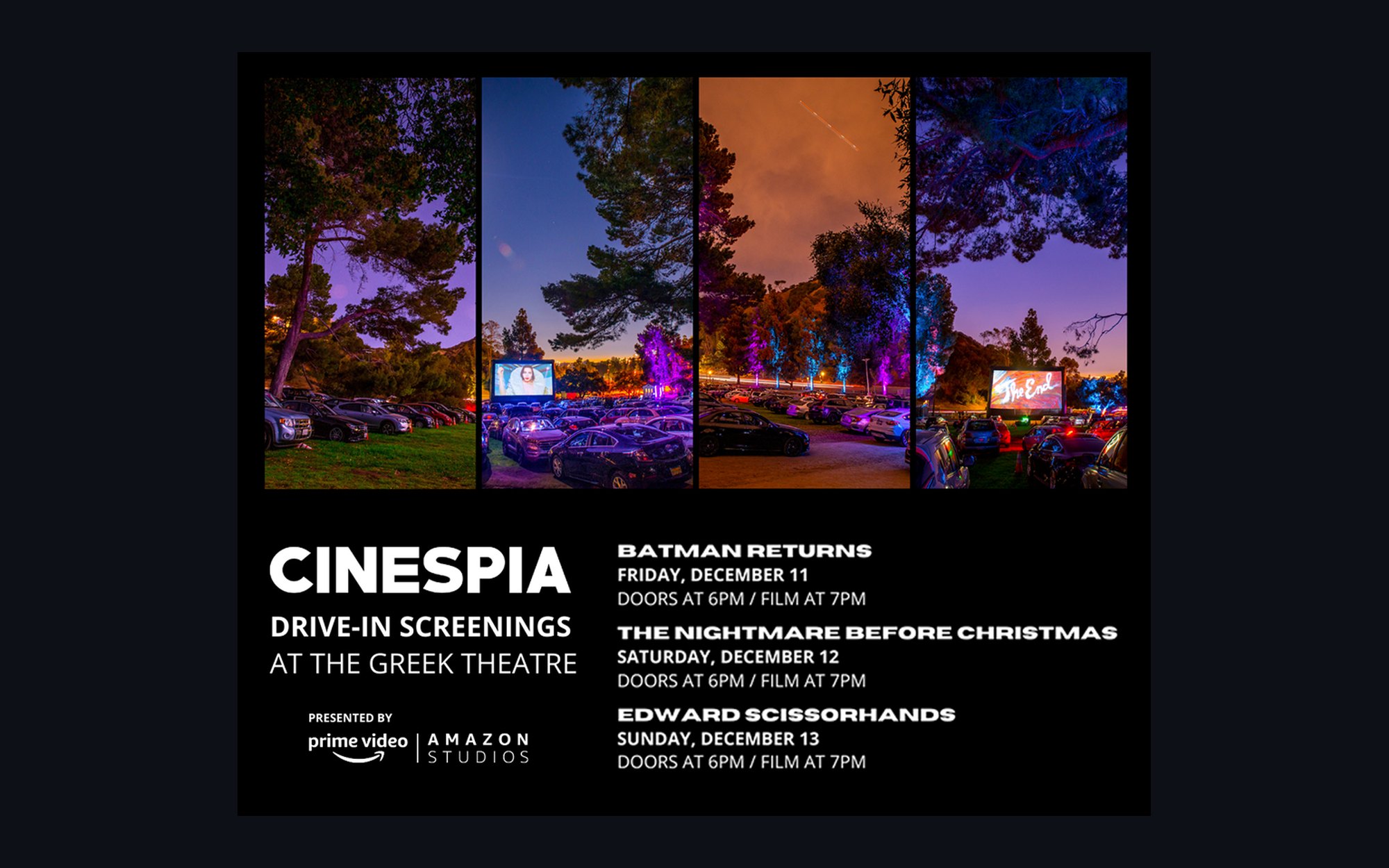
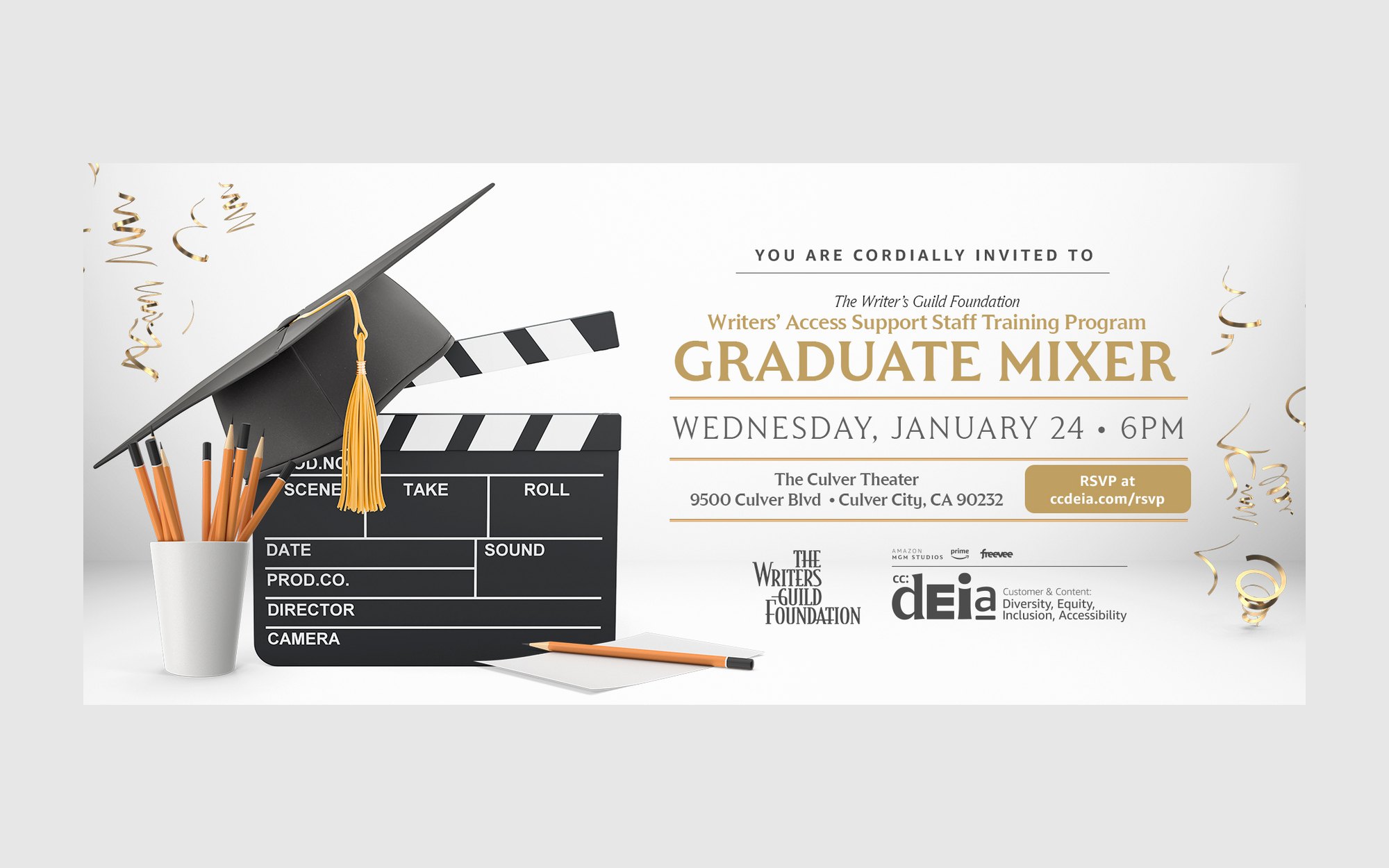
A studio runs on gatherings: a leadership conference, a training week, a drive-in screening, a wrap party, a flower cart in the lobby. Each one needed an invite by Friday. I treated them as small brands, with a mark, a color, and a layout that could stretch from an email header to a lobby screen.
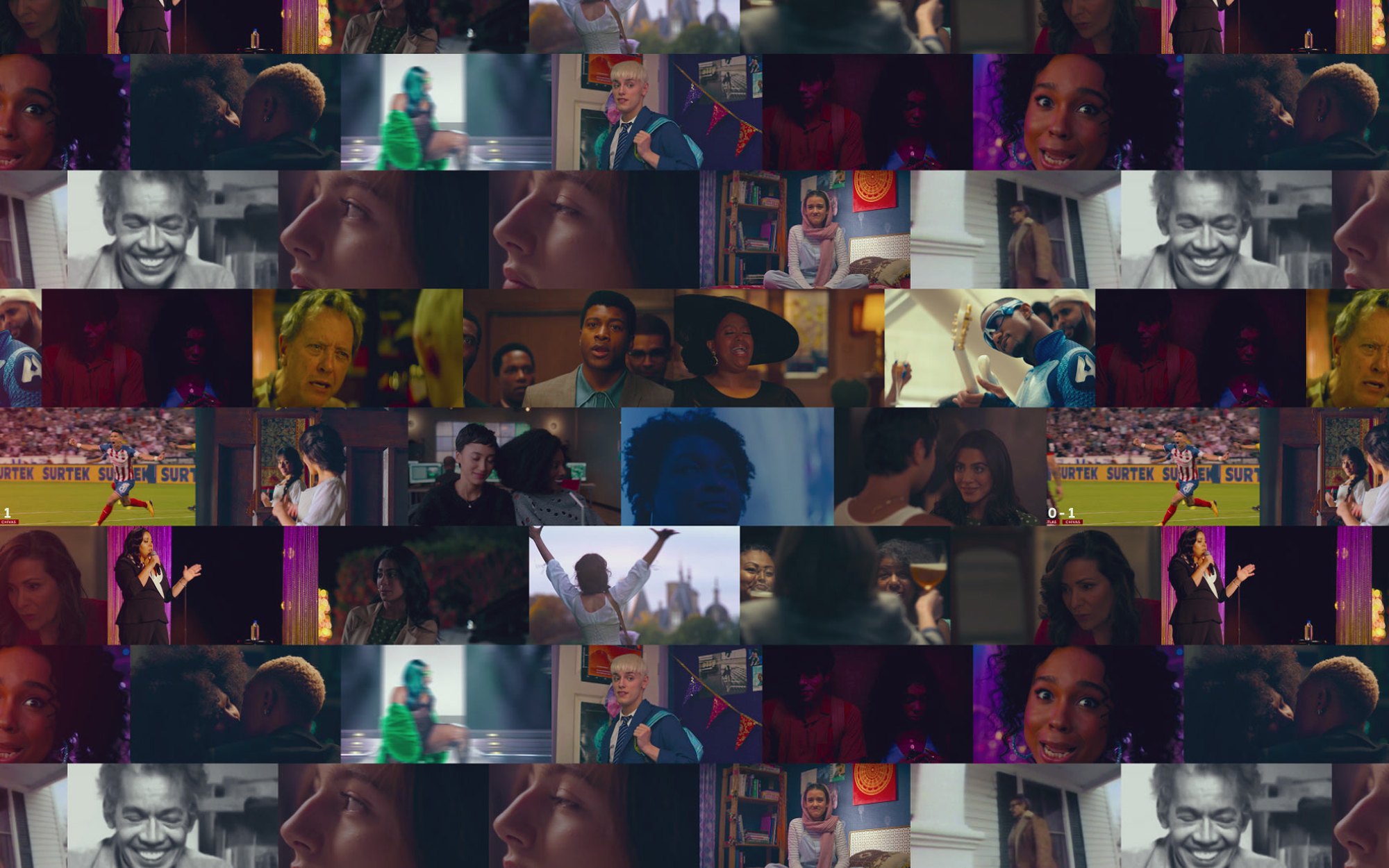
When the tenth anniversary of Prime Video came up, the same approach scaled to a film. I produced an eight-minute anniversary piece over nine weeks with teams across the company, built around an animated history of the service, and it premiered at a town hall of more than five thousand people.
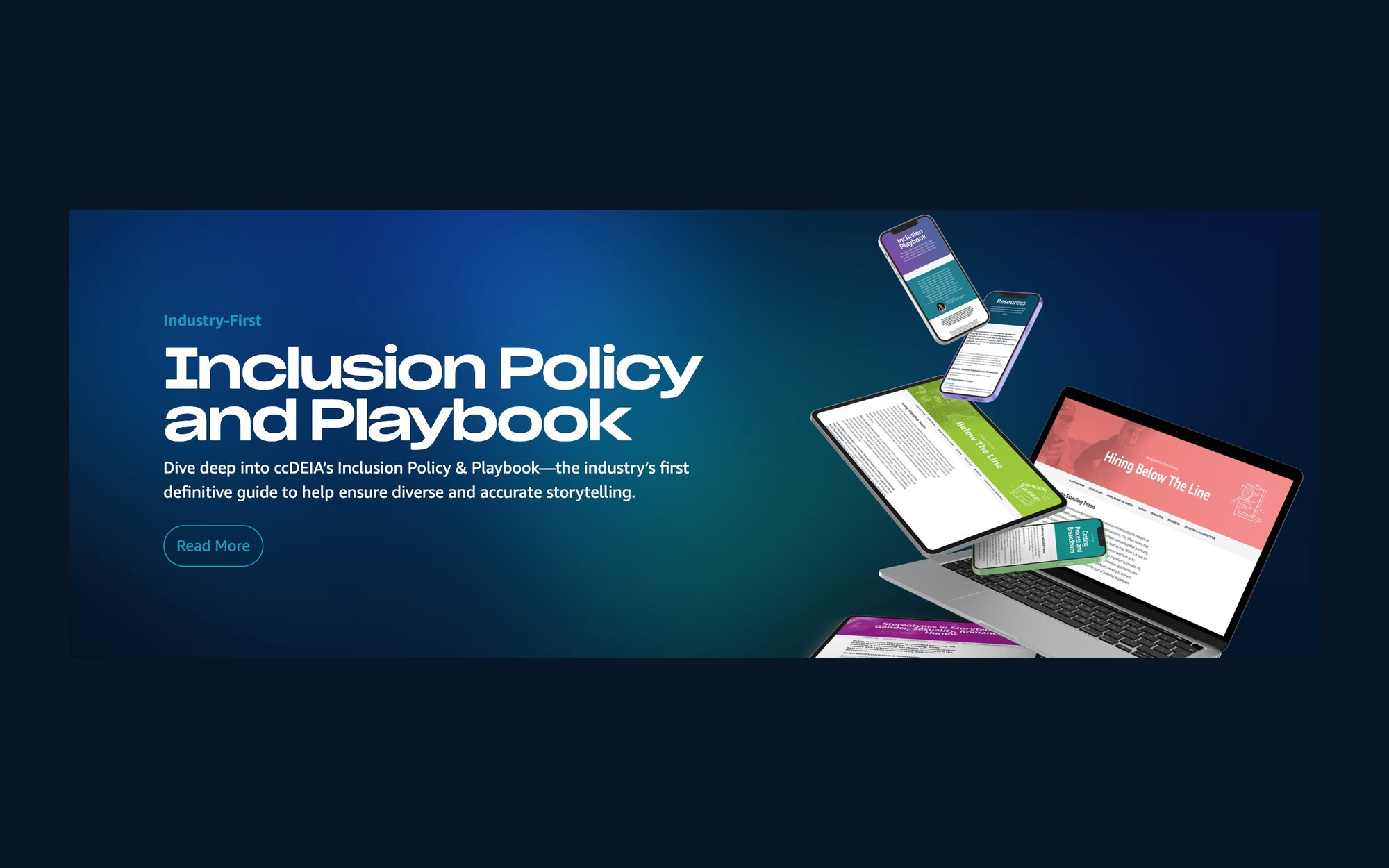
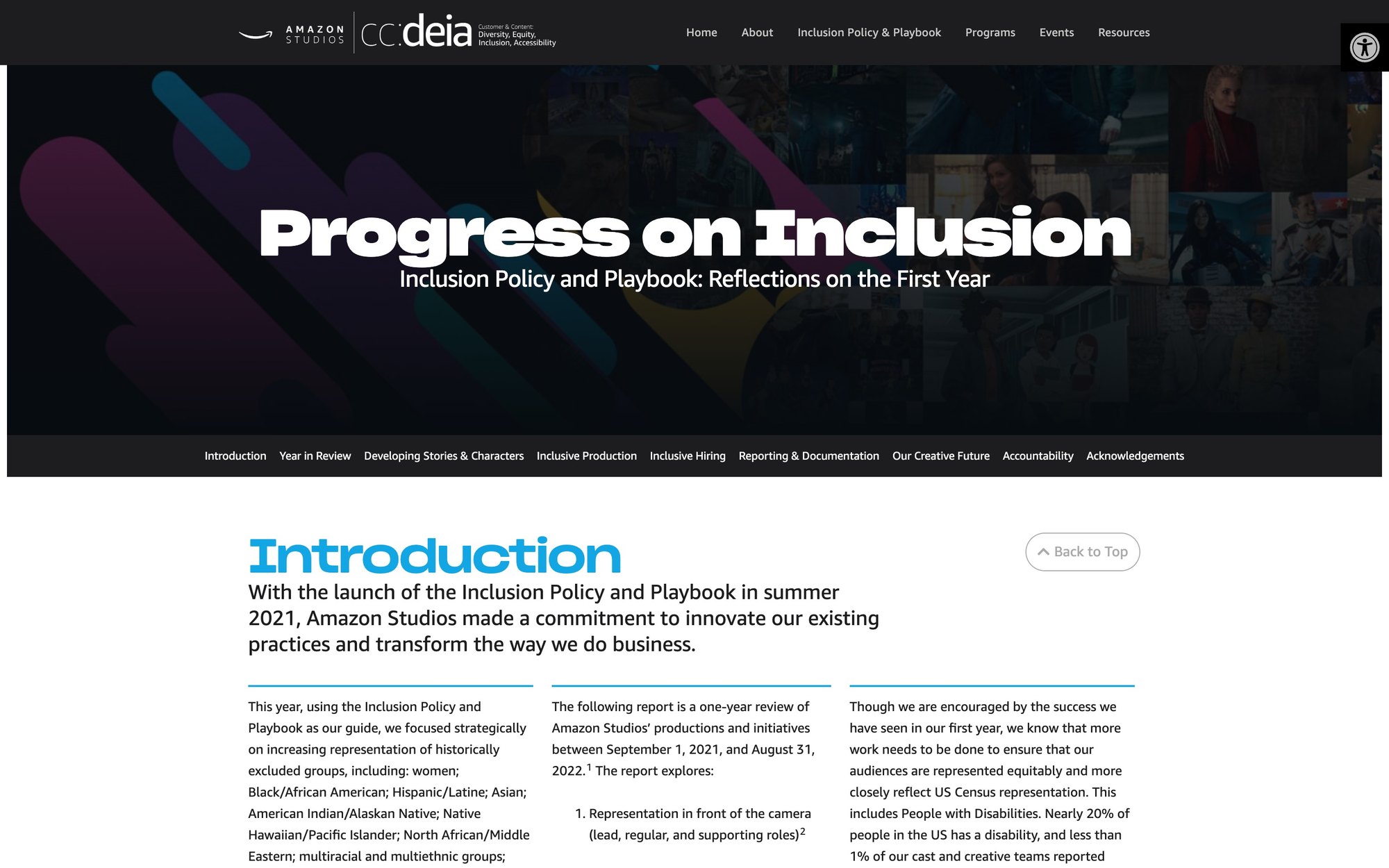
In 2021 Amazon Studios published an Inclusion Policy and a Playbook for meeting it, and shared both with the industry. My part was everything people could see: the brand, the sites, the documents, and the report. All of it has since been taken offline, so what follows is the record.
The opportunity. A policy like this lived or died on whether a producer in prep could find the page they needed and act on it that day. The audience was everyone from a studio executive to a casting assistant on an outside production. It had to read as credible to a journalist and useful to a line producer, and it touched subjects where one careless image would undo the text beside it.
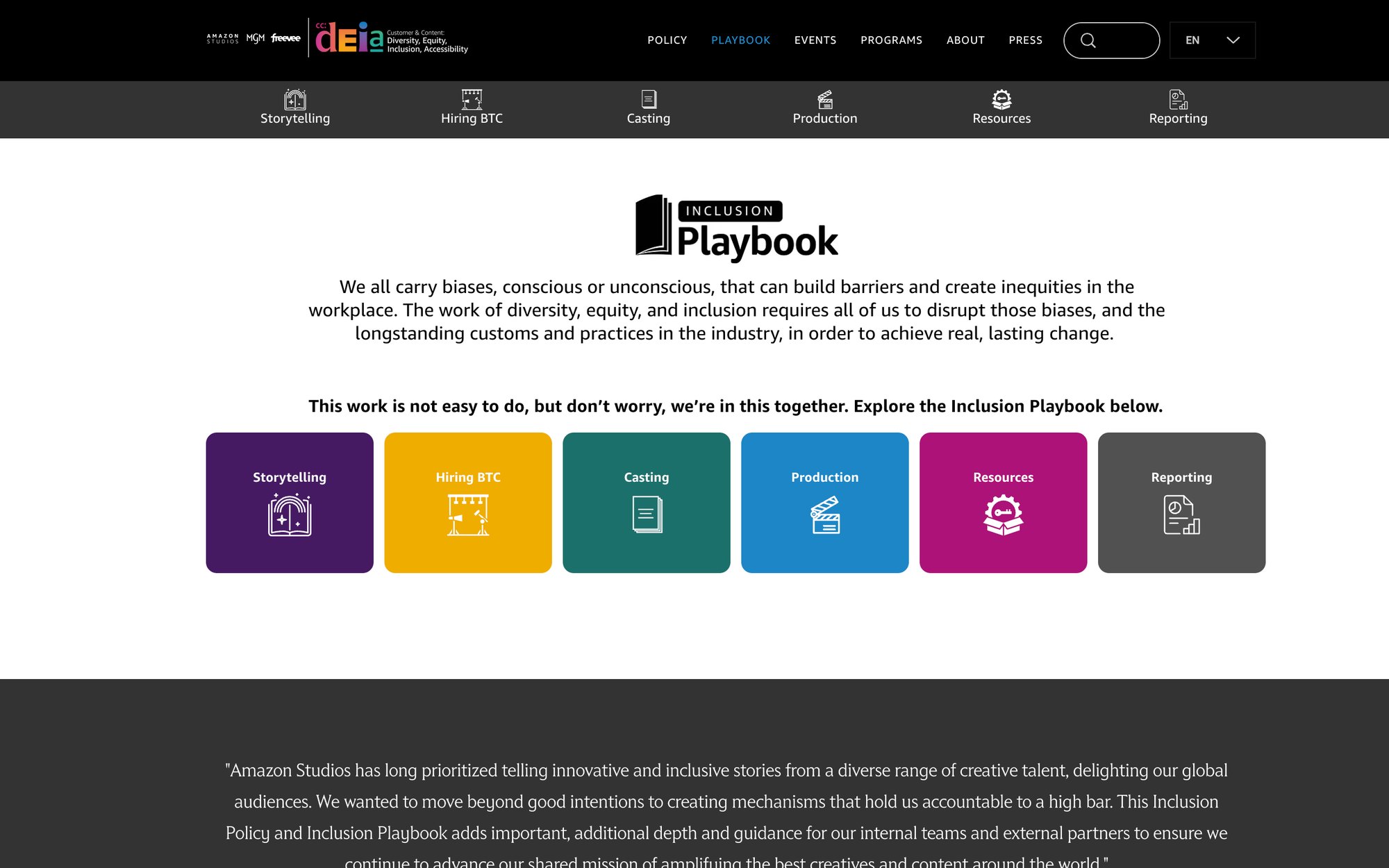
The system. A brand for the team, cc:DEIA, with a spectrum that could carry six areas of work without ranking them. A public site built in four weeks for the launch. Then the Playbook rebuilt as chapters that follow a production from development to post, tip sheets a crew could print, and a yearly report with one chart language from the first page to the last.
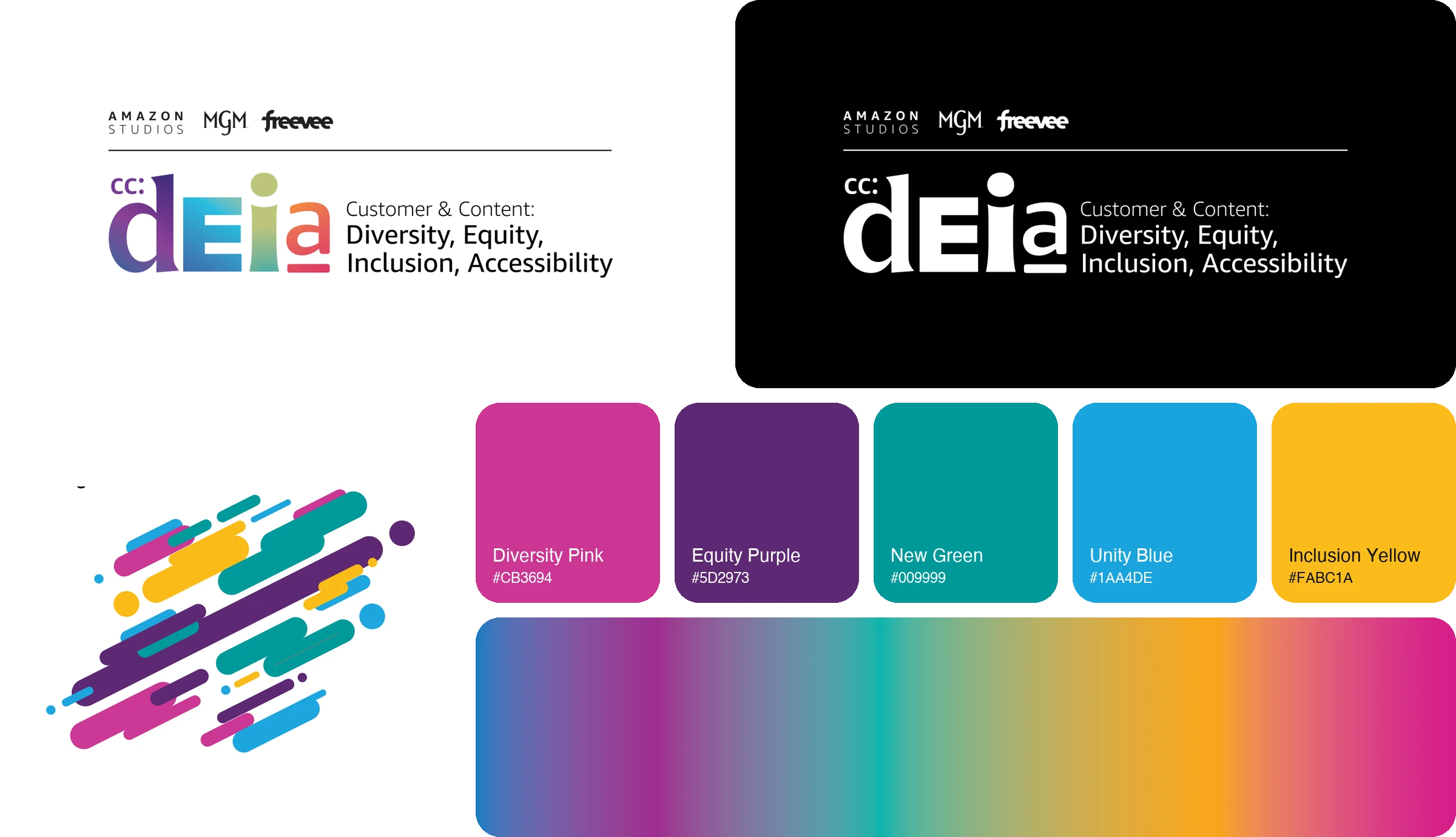
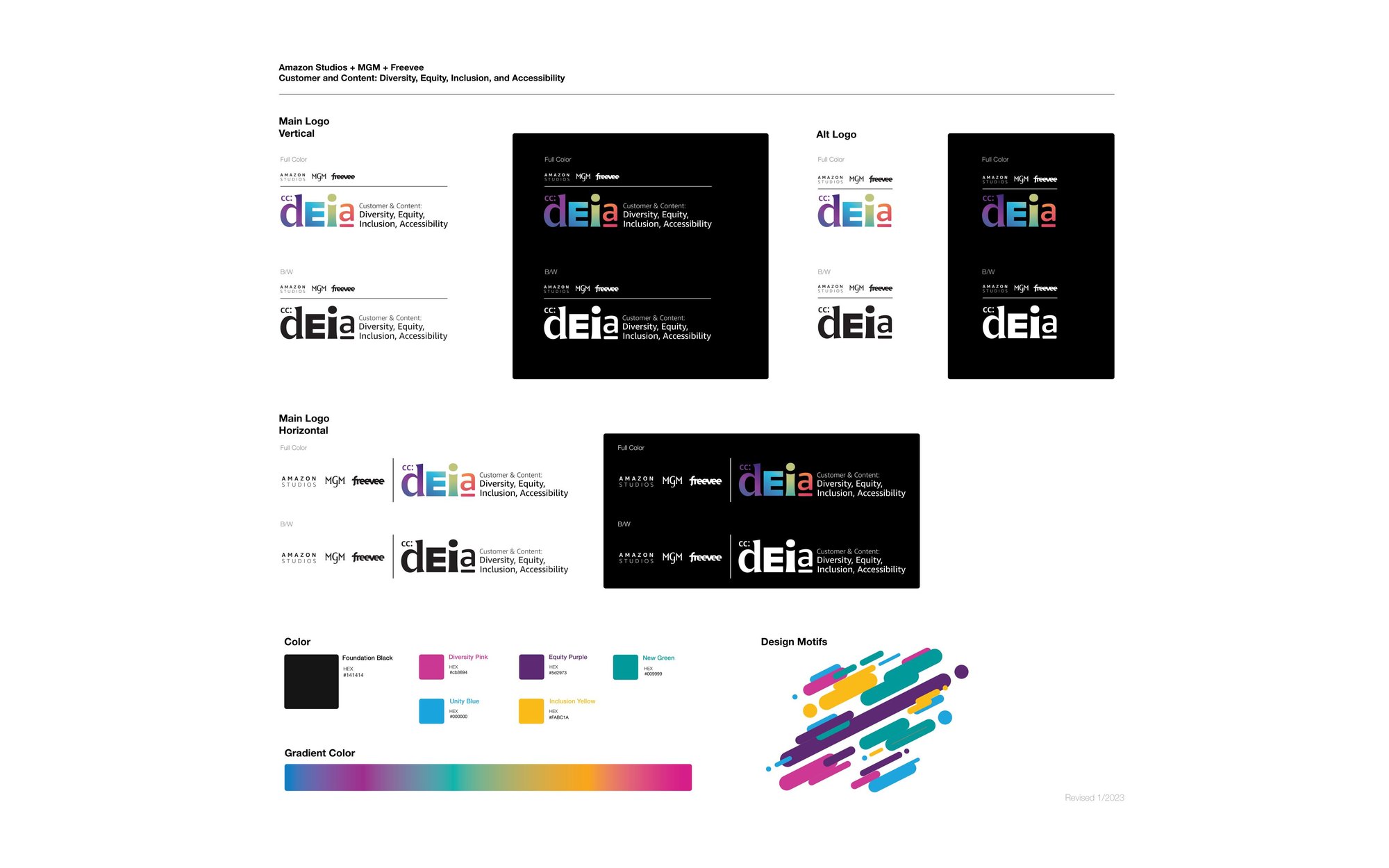
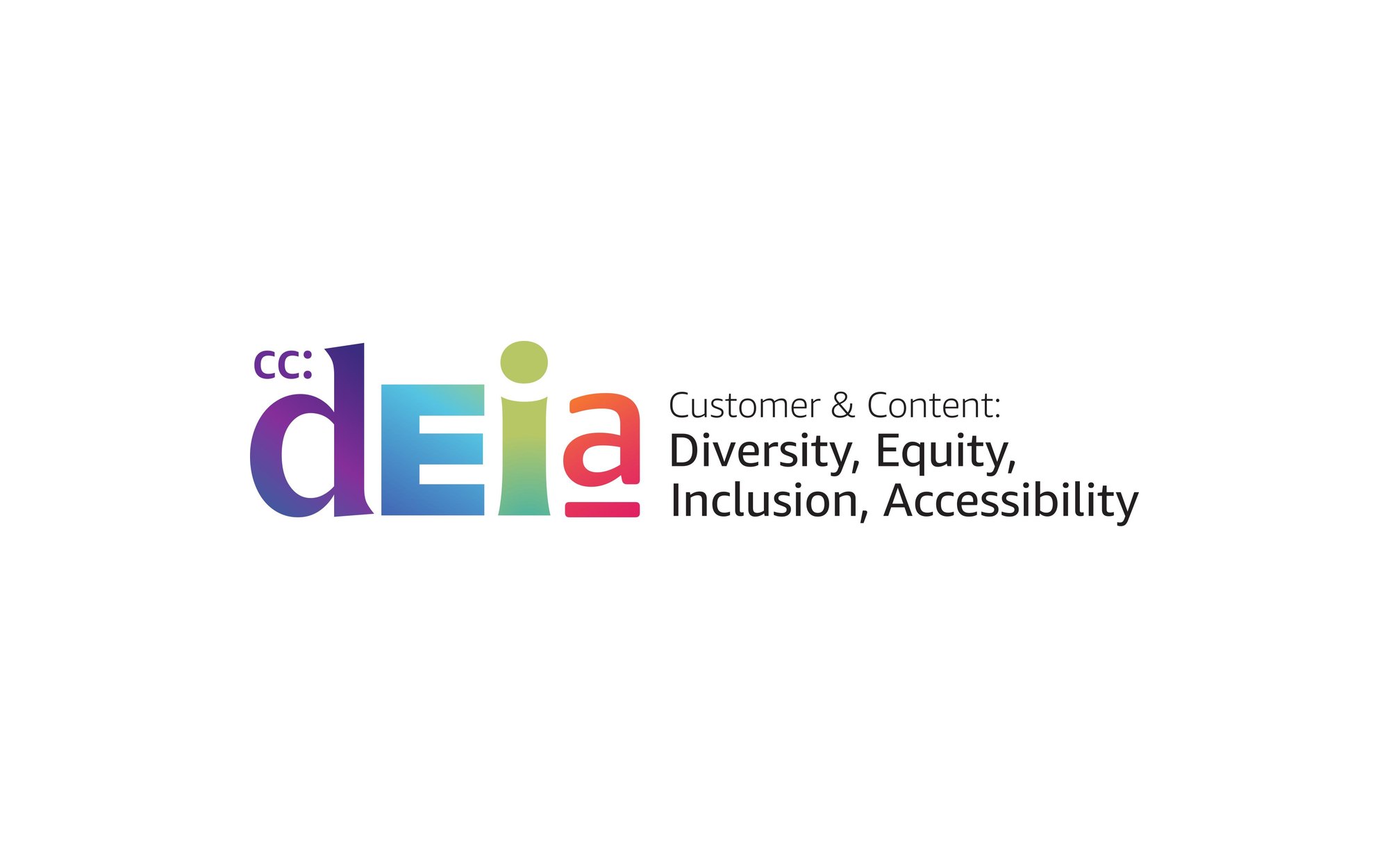
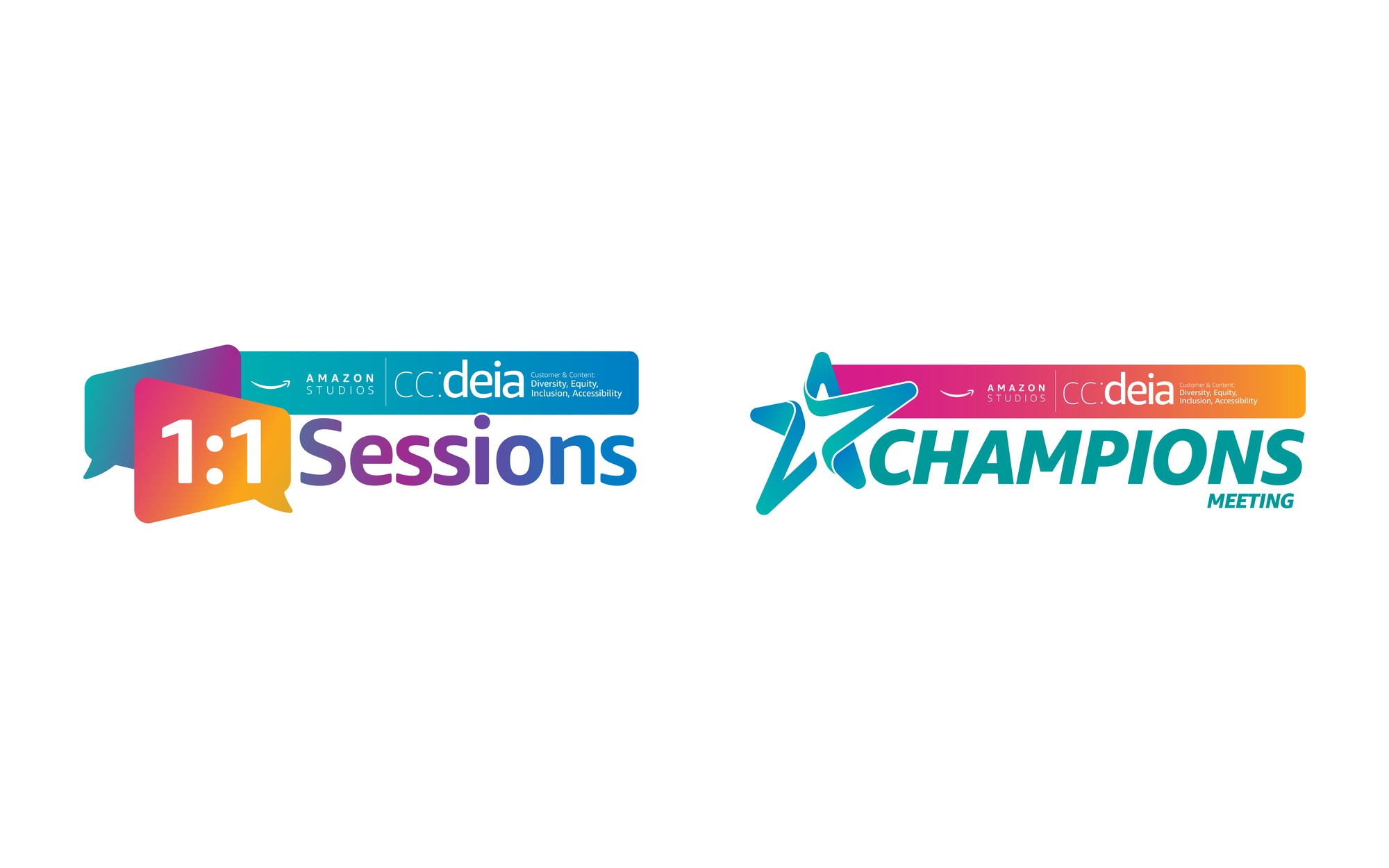
The team’s full name was Customer and Content: Diversity, Equity, Inclusion, and Accessibility. That is a lot to set in a corner of a slide. The mark shortened it to cc:DEIA and let the color do the explaining, one hue per letter, drawn from a single gradient so they read as a family.
Around it I drew the smaller marks the team’s programs needed, animated the logo for film opens, and built the deck template the team presented from. The diagonal dashes that run through the reports started here.
The first public site had one job: be live, and be right, on the day the Policy and Playbook were announced. I designed and built it in four weeks, alongside my internal comms work, which saved the team about forty thousand dollars in outside development. It had more than fifty thousand views while it was live.
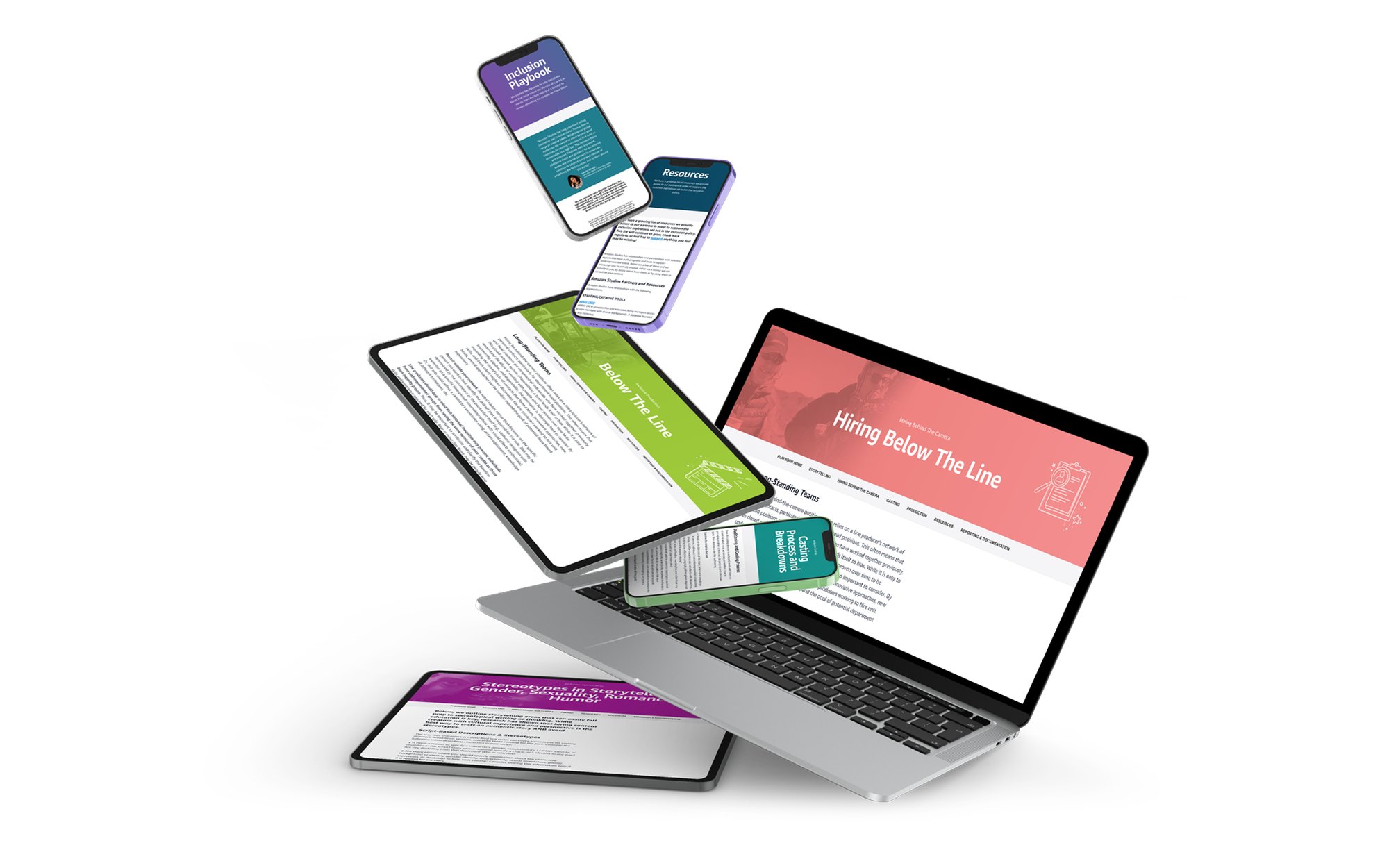
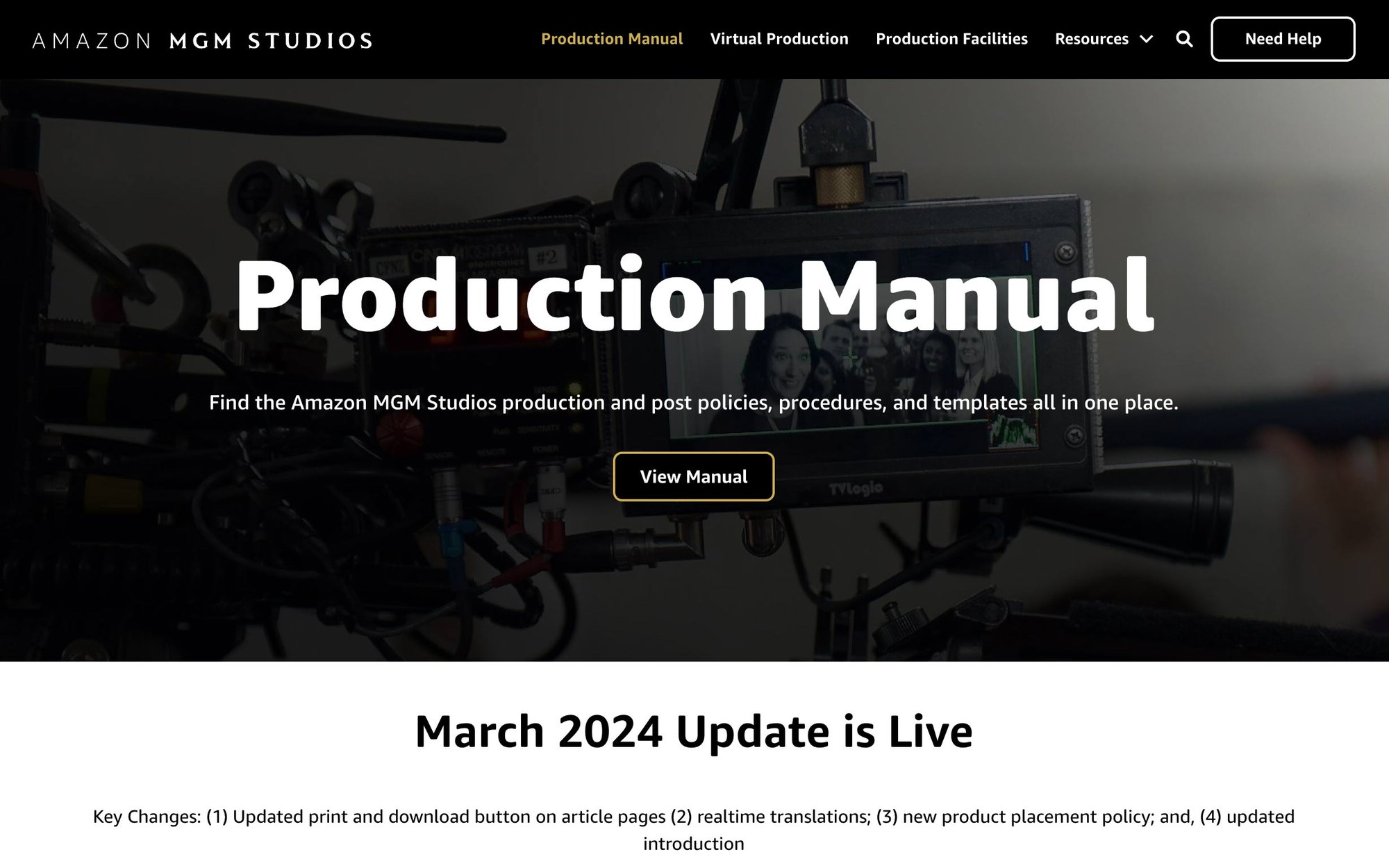
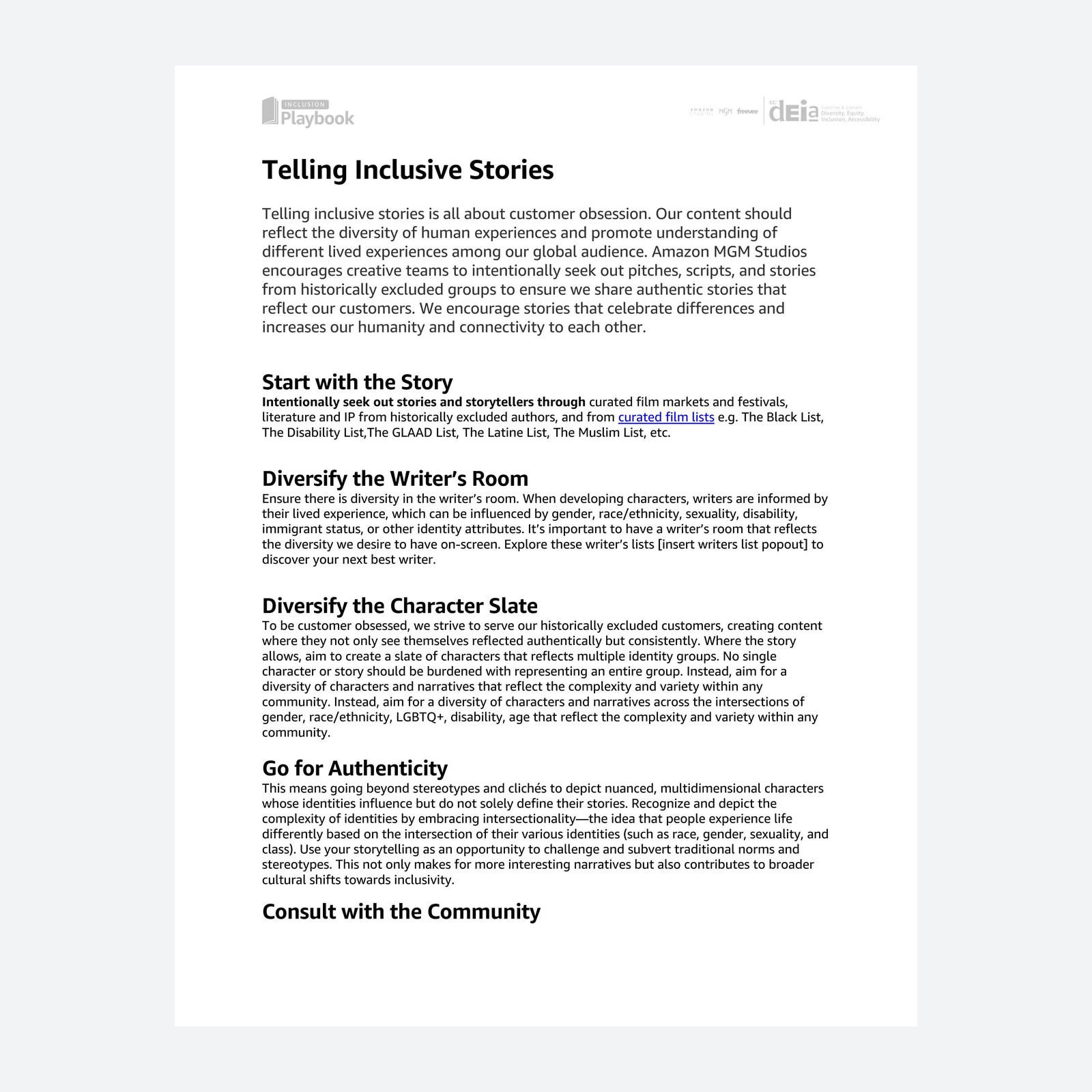
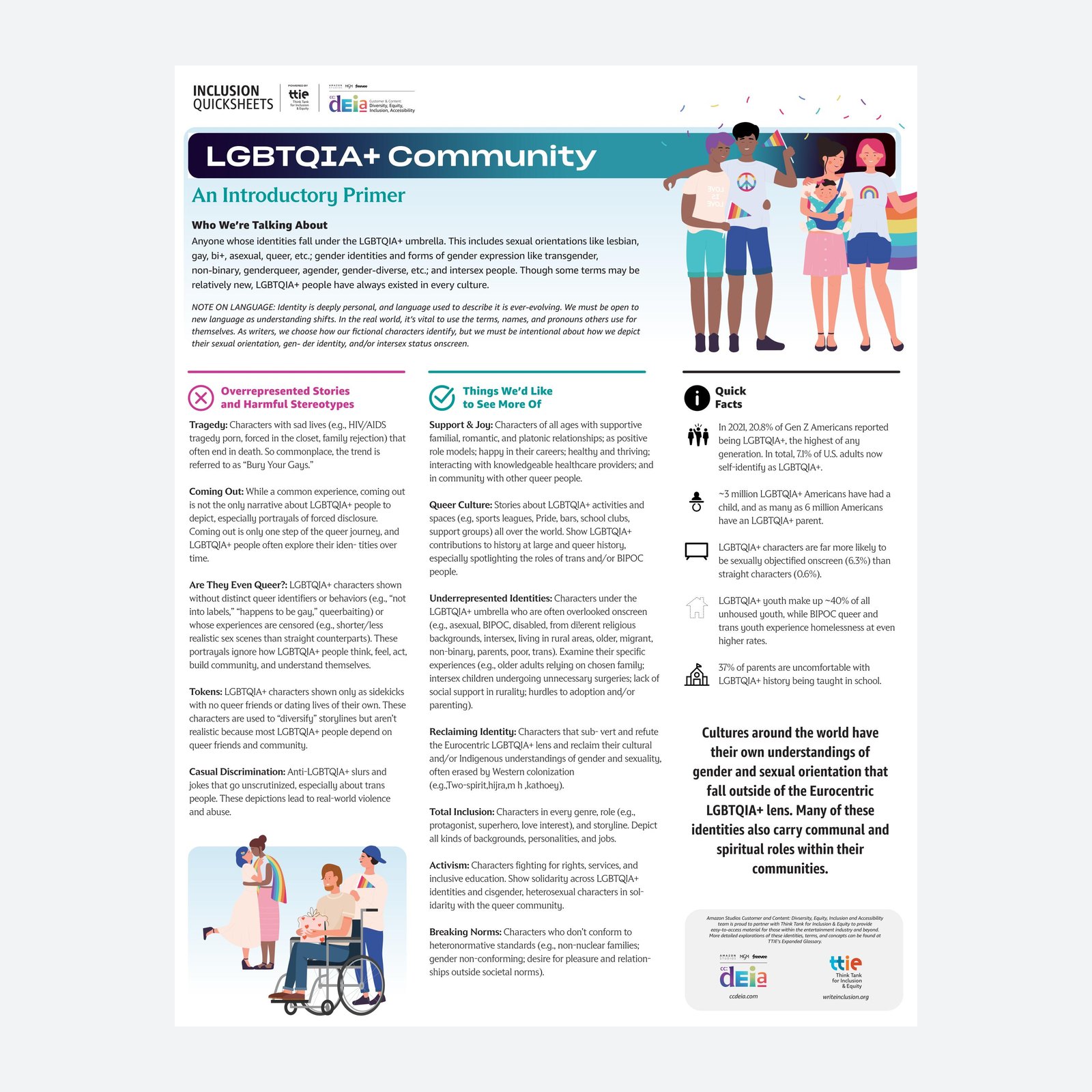
Two years later the Playbook had outgrown a PDF. I rebuilt it as a site inside the studio’s Production Manual, in chapters that followed a production in order, with tip sheets a crew could print and keep on set.
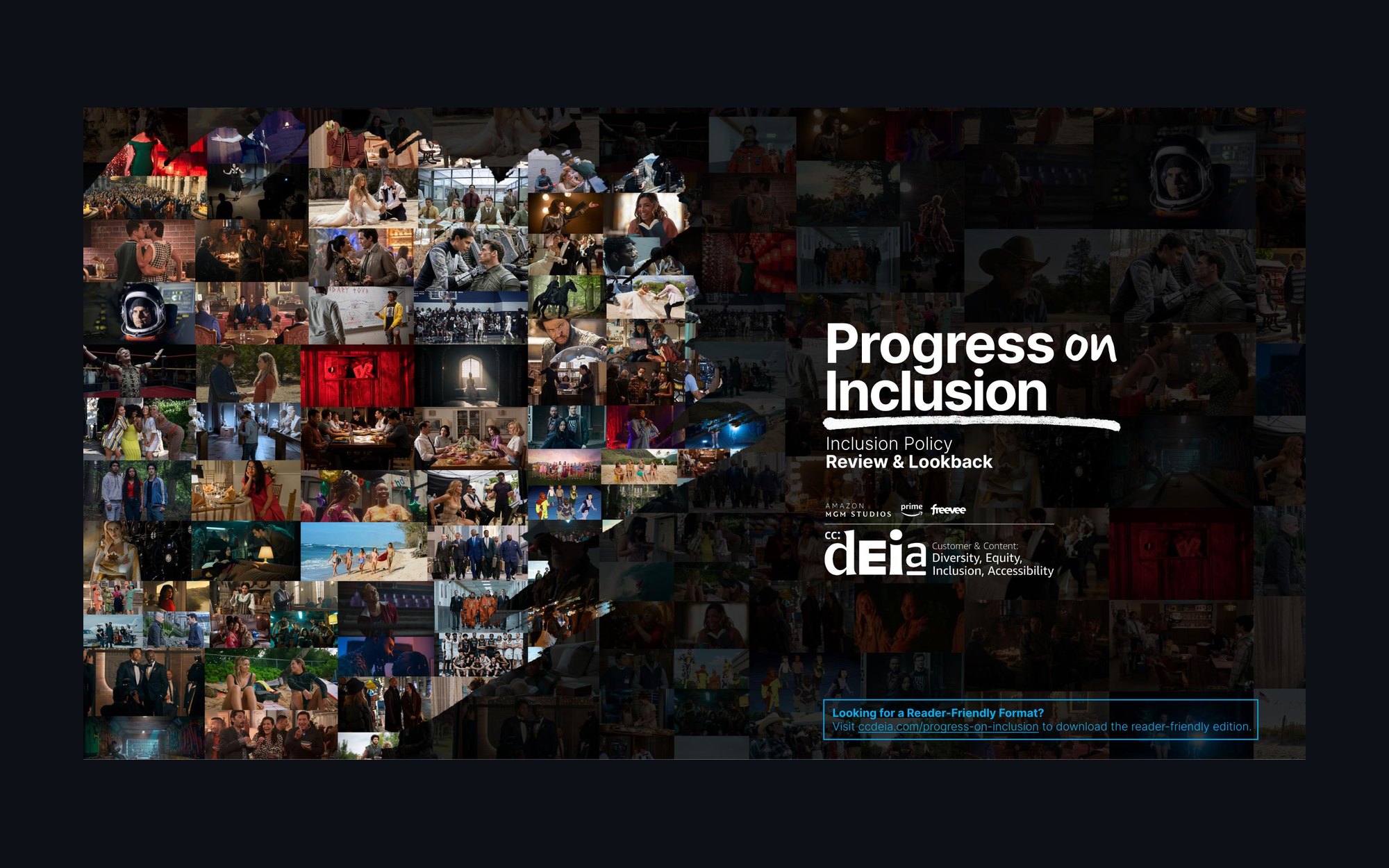
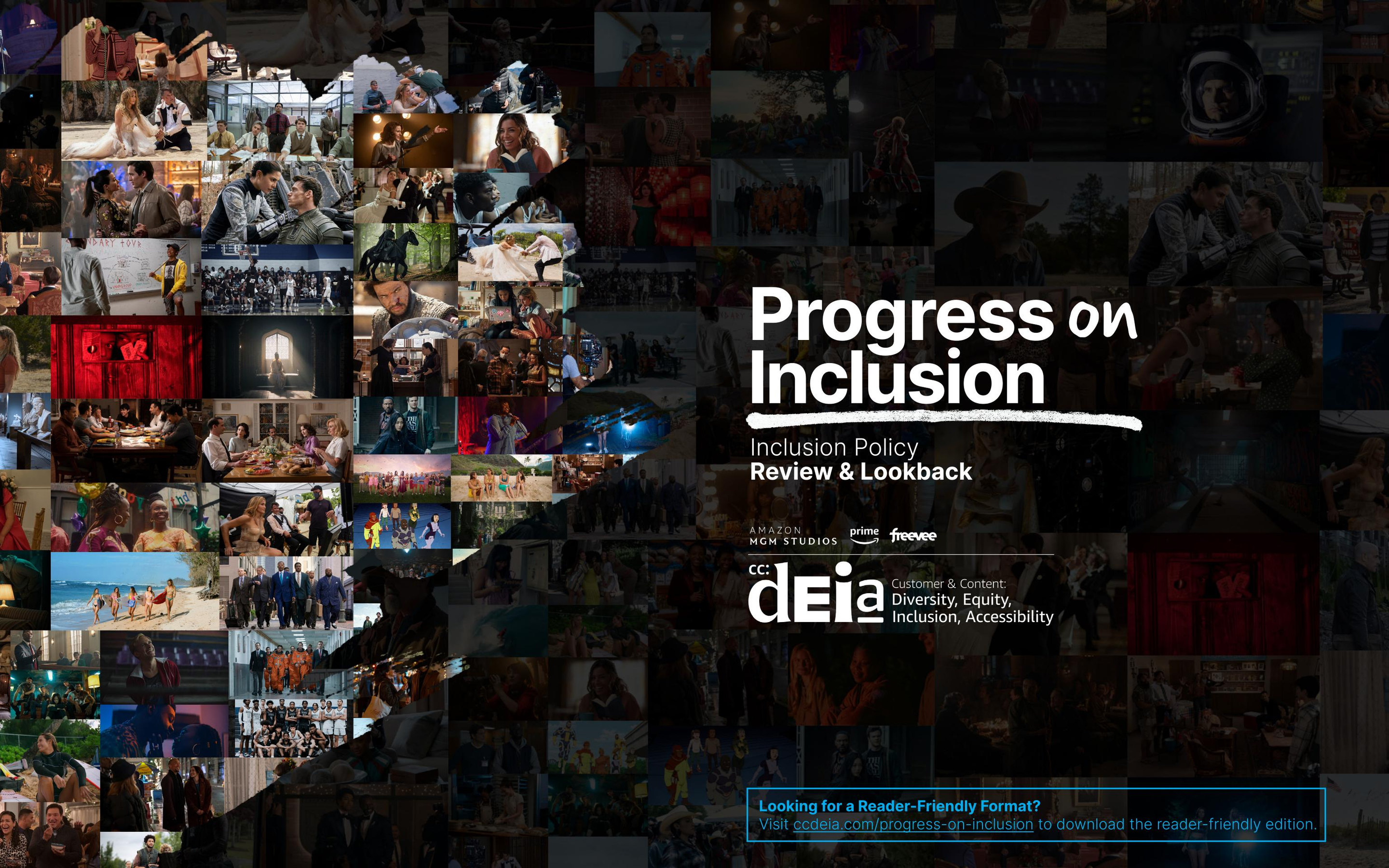
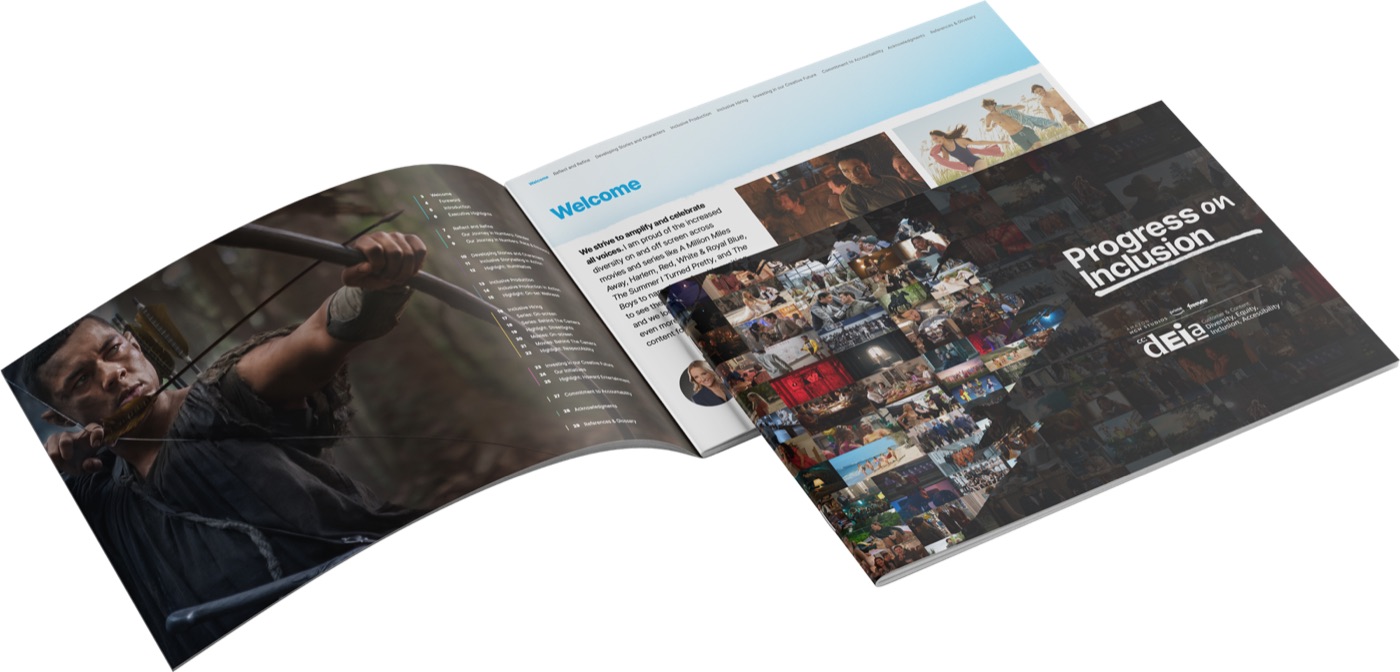
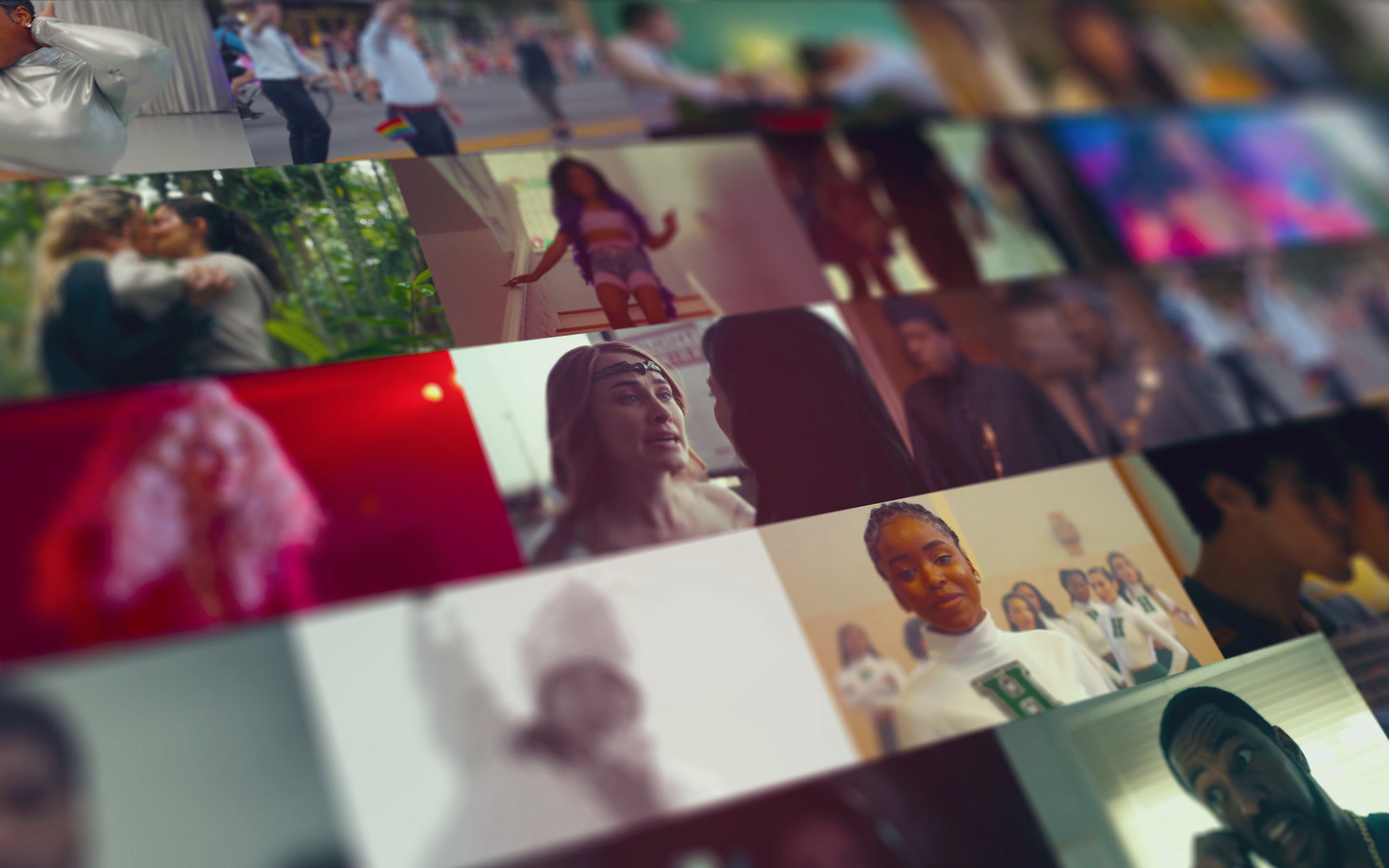
A policy invites a fair question a year later: how is it going? Progress on Inclusion was the studio’s public answer, and I designed both editions end to end: the cover, thirty pages of editorial and data design, the web edition, the title sequence, and the social cutdowns for launch day.
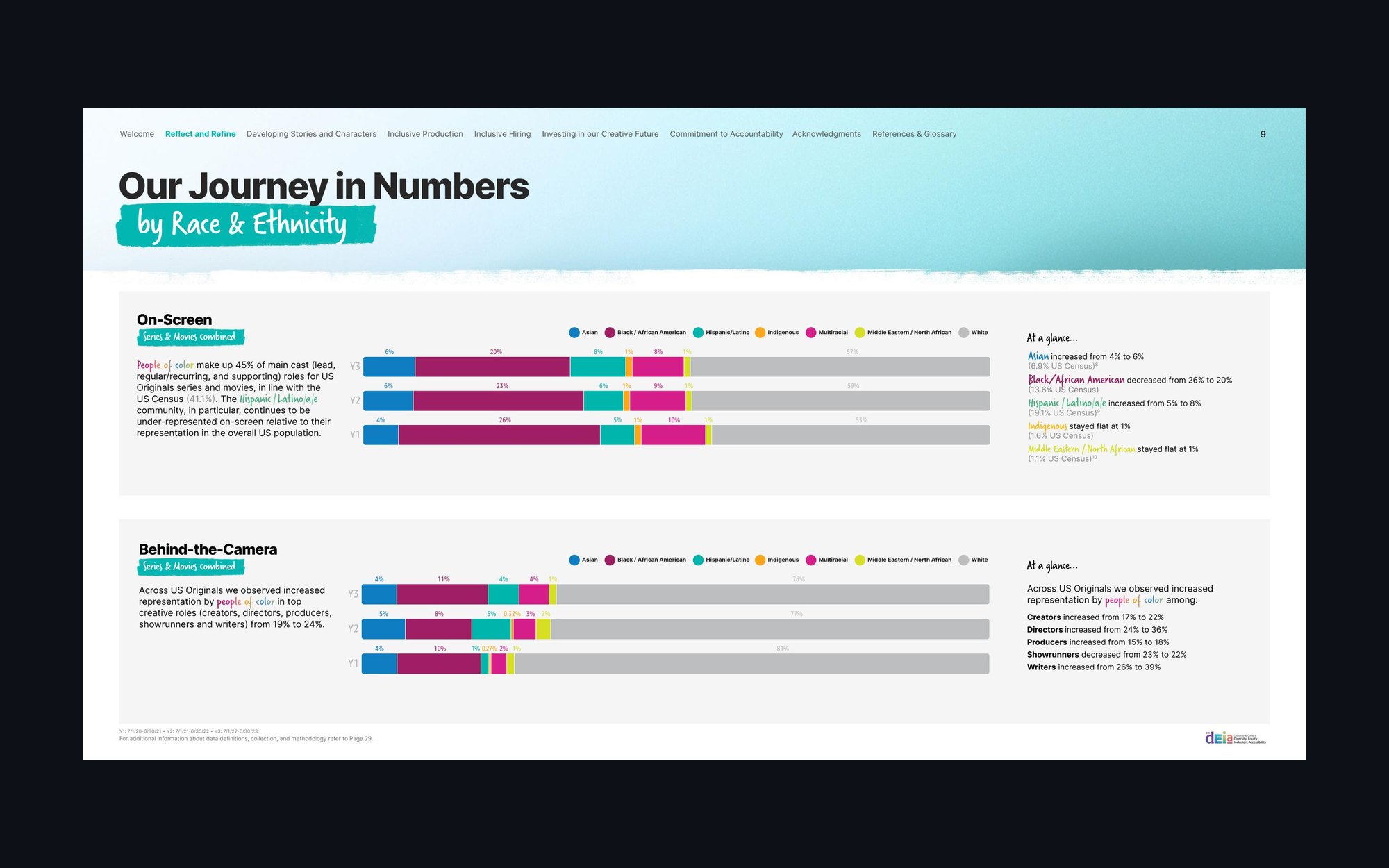
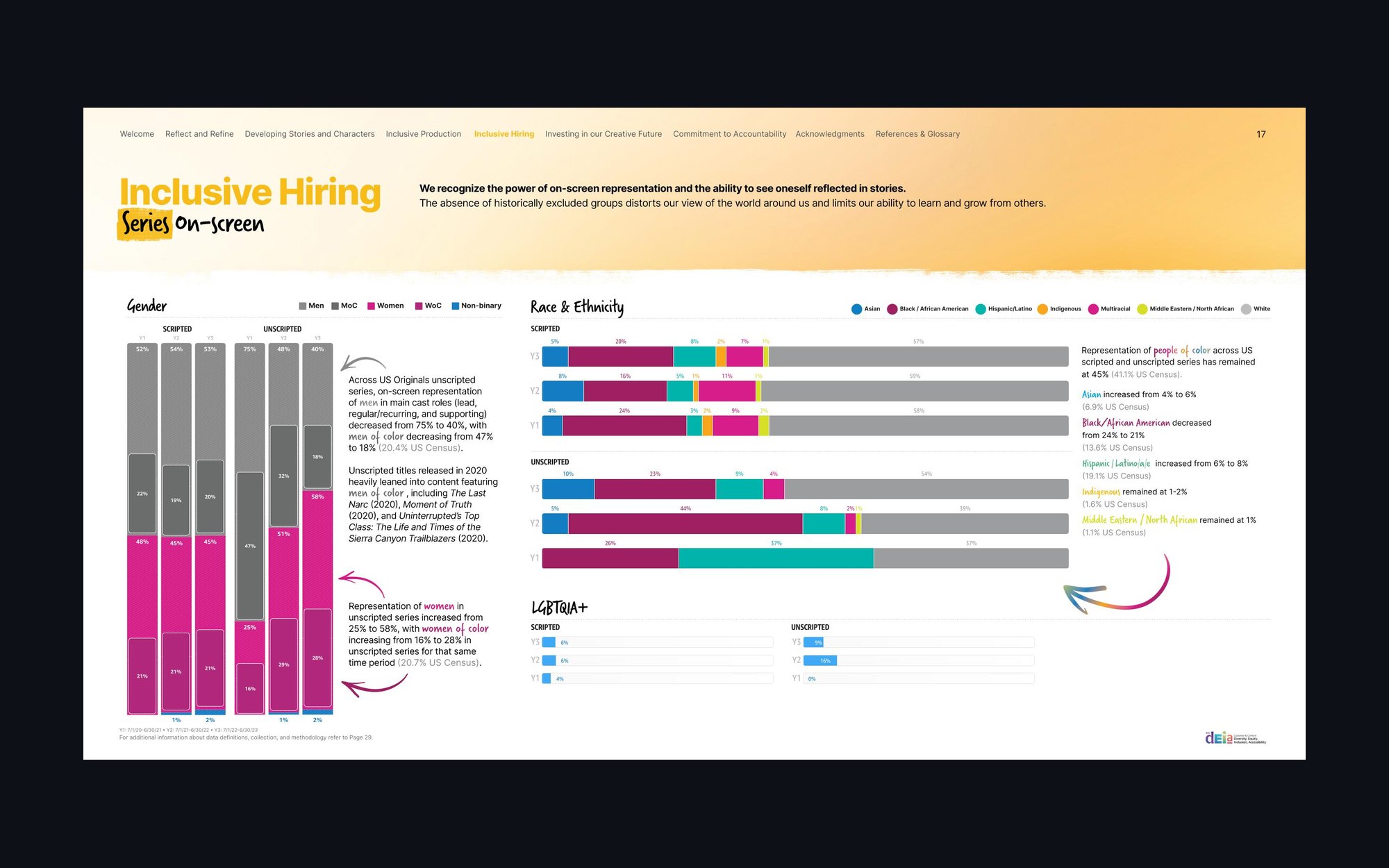
The hard part was the data. The report counted who was on screen and who was behind the camera, by gender and by race and ethnicity, across series and films. I drew one chart language for all of it, so a reader who learned the first chart could read the last. We also published a reader-friendly edition: the same report on a plain ground, in a simpler layout, for anyone who wanted the text without the design. The report is no longer on Amazon’s site, so I keep a copy here: read the full report (PDF).
Some things land better said out loud, by the person they happened to. Across both jobs I produced the shoots, cut the films, and built the motion that opened them.
The opportunity. The Playbook told a production what to do. It landed harder when a writer, an advocate, or a department head explained why, in their own words. The inclusion team also ran summits, pipeline programs, and days of reflection, and every one of them needed to look like it came from the same studio that made the shows.
The system. One set, one gradient, six interviews, so the vignettes cut together as a series. A title sequence built from the slate itself. Identities for each program that could open a film, fill a stage screen, and sit in an email, all from the same files.
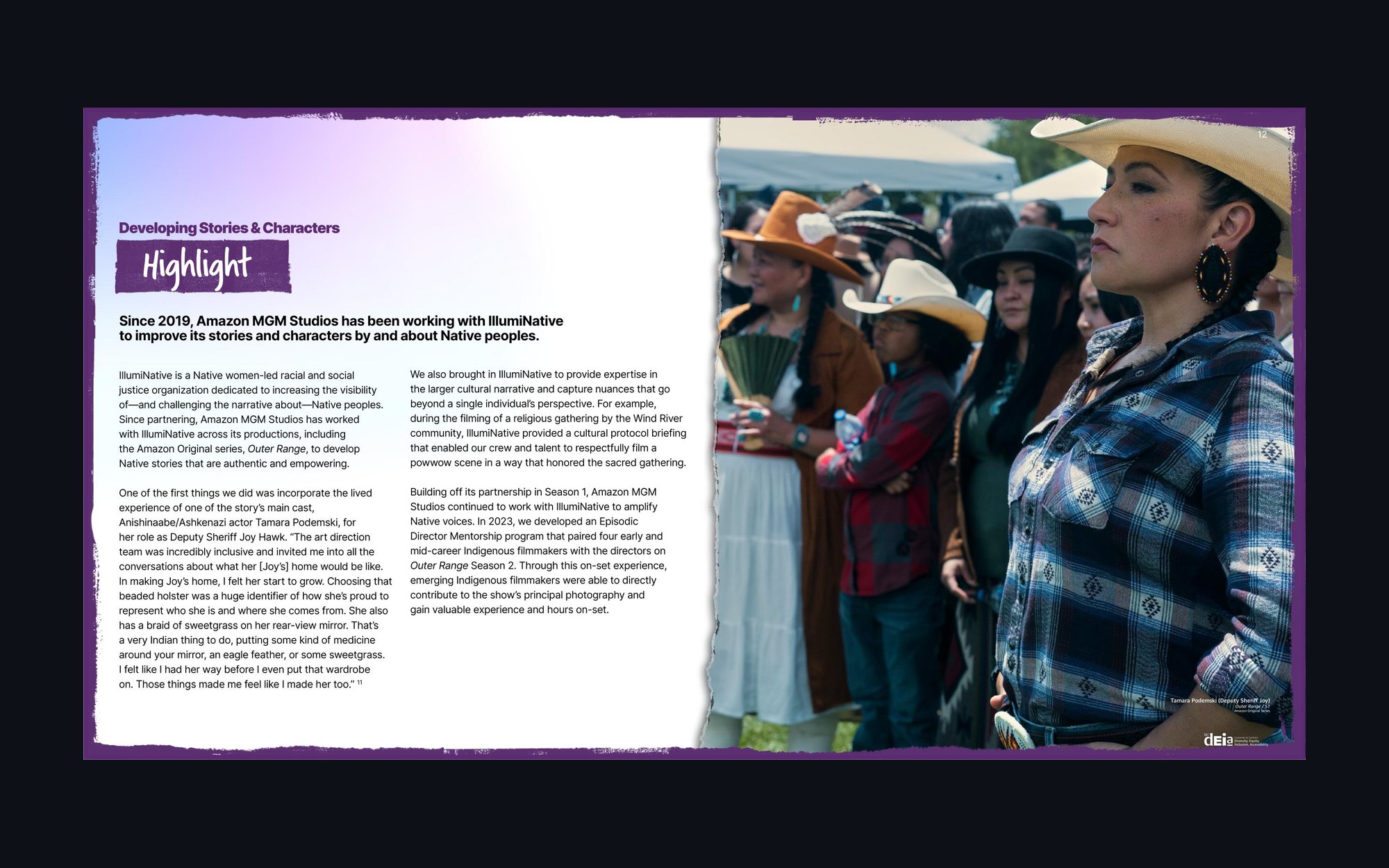
For the rebuilt Playbook we filmed six people from the studio’s partner organizations, among them IllumiNative, GLAAD, and Define American, each talking about what inclusion looks like on a real production. The look is a single seat against a color field that changes with each speaker, so every interview is its own and the series still reads as one piece.
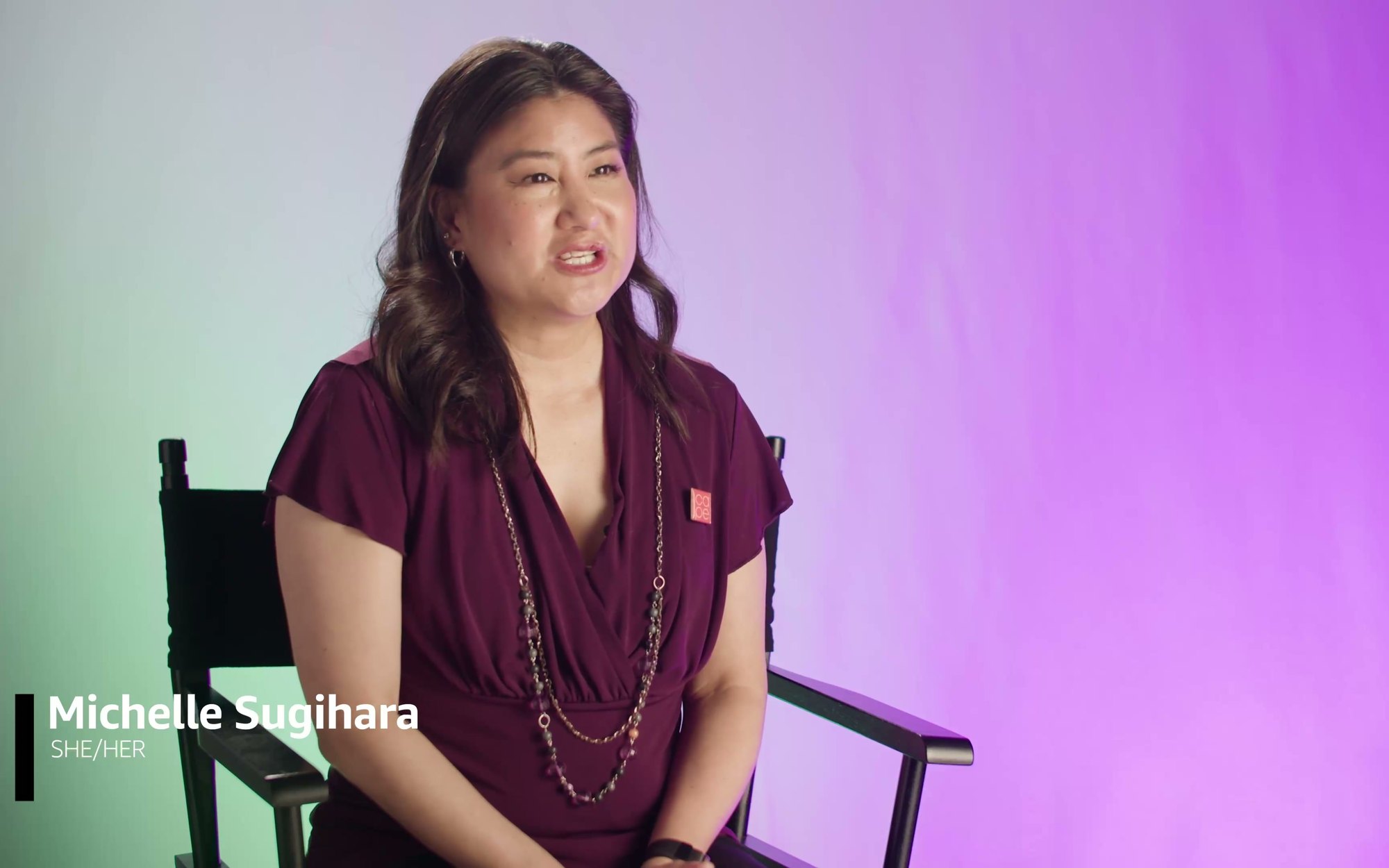
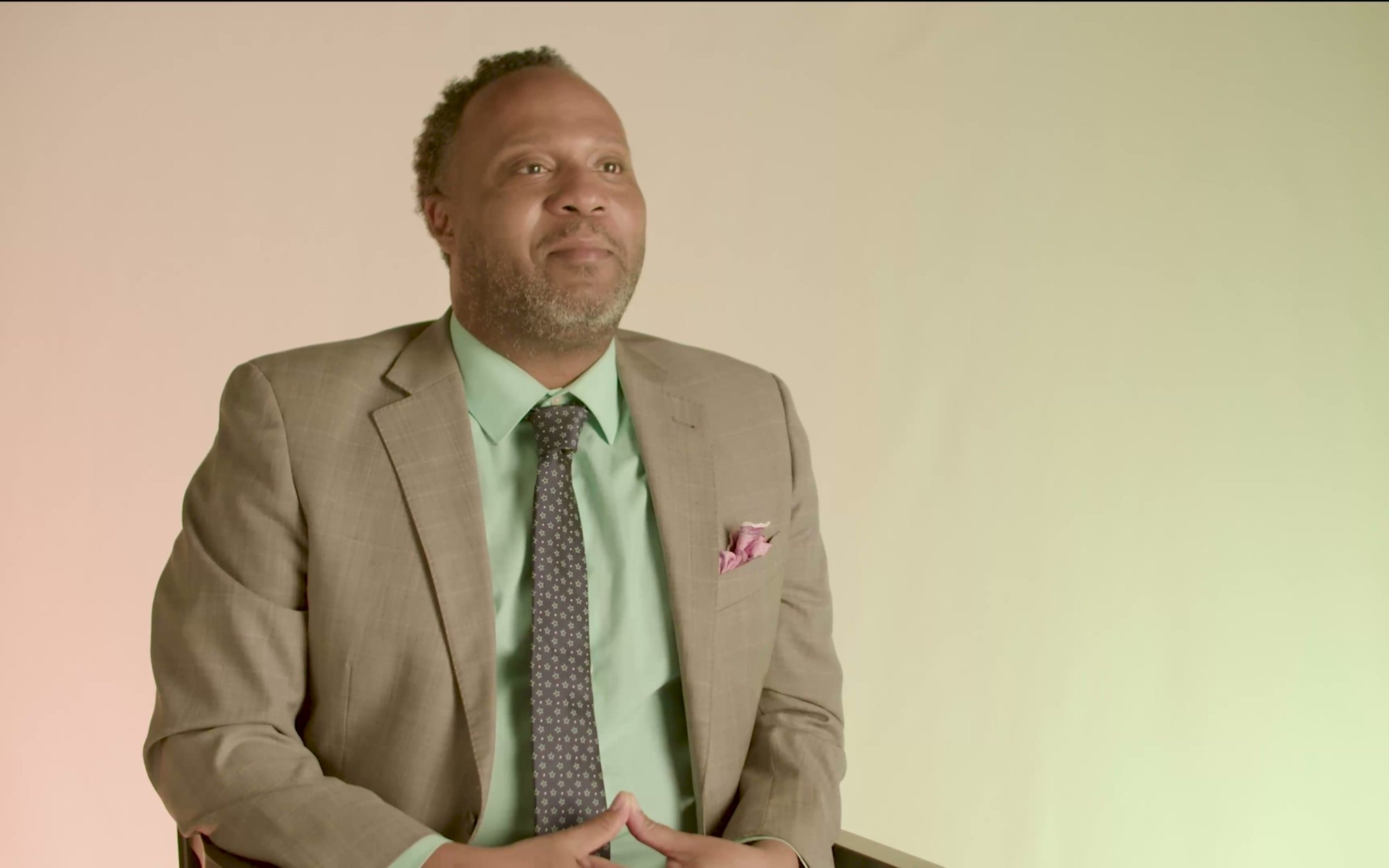
In June 2020 the studio held a day of reflection for Juneteenth: six live sessions, back to back. I designed the identity, recorded every session, and had each one edited and posted within twenty-four hours, so the conversation could keep going that week. The series has been watched close to twelve thousand times.
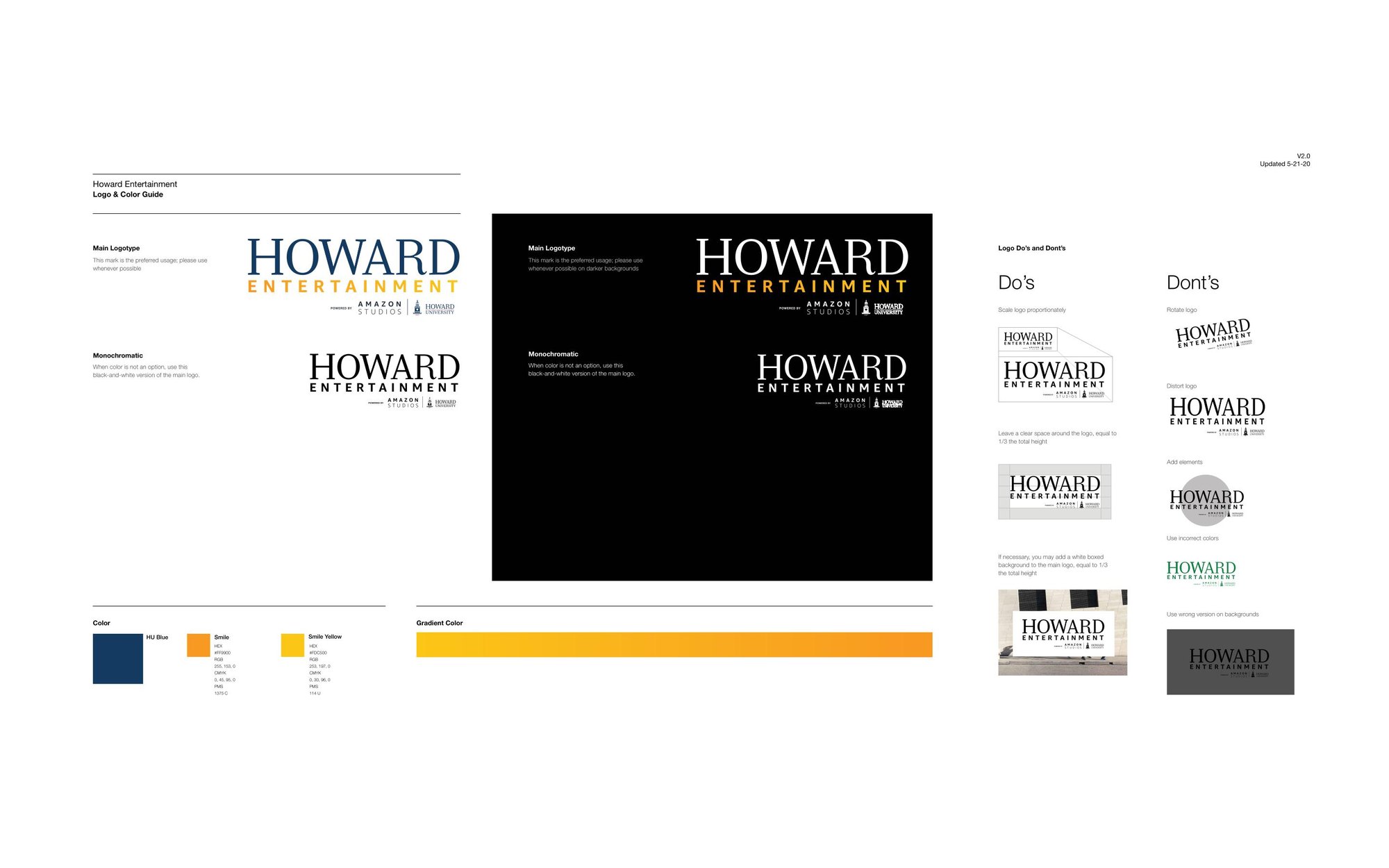
Howard Entertainment, the studio’s program with Howard University, needed a film and an identity, and I made both. For the Shine Summit I built the stage package: the logo open, the honoree animations, a sixty-six slide show deck.
Both jobs were the same job at different volumes. Inside, the reader was a colleague with forty unread emails. Outside, it was a producer deciding whether a policy was worth their afternoon. In both cases the design had to earn the next thirty seconds of attention, and then be useful enough to deserve it.
I also learned to build the thing myself when that was the fastest route. Two sites, a hundred issues, fifty episodes, and two reports came out of a very small team, because I could design each piece, make it, and hand it over in a state other people could run.
Since I left in 2024, Amazon has retired the Inclusion Policy and Playbook, and the sites that carried them now point to a general company page. No Progress on Inclusion report has followed the second edition. That is why this page leans on captures and a PDF: for much of this work, they are the record.
The people still at the studio who care about this keep pushing for accurate representation on screen and fair access behind the camera. I’m proud of what we built together, and the thinking in the Playbook holds up wherever it gets used next.
Sites, designed and built. An internal hub for 20+ teams and a public policy site, both shipped without an outside vendor.
Editorial and data design. Two thirty-page public reports, a reader-friendly edition, tip sheets, and primers.
Brand systems. The cc:DEIA identity, program marks, series identities, and the templates teams ran on.
Internal communications. A weekly update for about eleven thousand people, held at a 70 percent open rate.
Film and motion. Interview shoots, title sequences, program films, and more than fifty packaged episodes.
Events. Identities and stage packages from a lobby pop-up to a two-day summit.
Tell me what you're building and where it's stuck. I'll tell you honestly whether I'm the right person for it.